Aug.31,2026
When a high-voltage battery pack develops a hot joint, plating choice is often the first design decision engineers revisit. This comparison examines nickel-plated copper busbars for EV battery packs and tin-plated copper busbars for electric vehicles, with particular attention to busbar corrosion resistance in high-voltage battery systems. The decision affects EV battery pack components, cell interconnects, and thermal management, while measurable factors such as IACS conductivity, contact resistance, and galvanic corrosion determine whether a connection remains reliable after years of vibration, humidity, and thermal cycling.
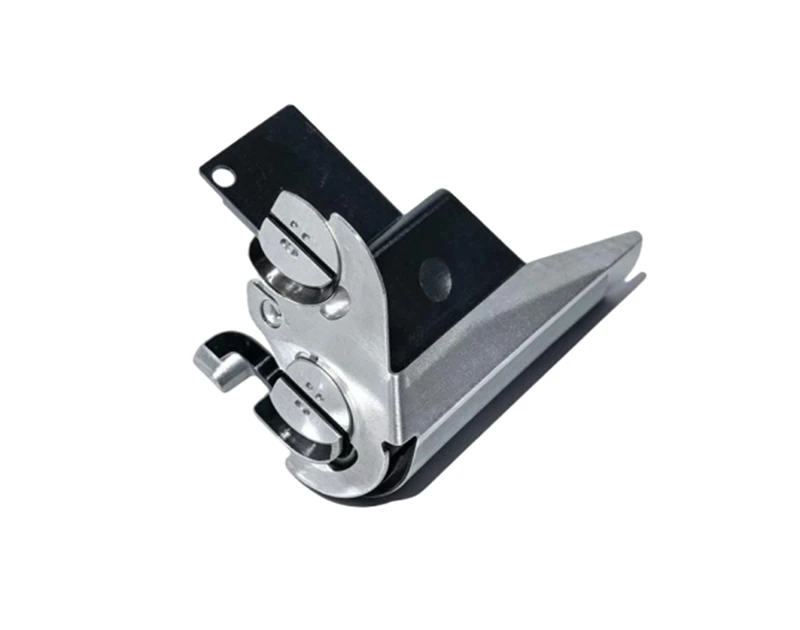
A copper busbar already offers excellent electrical performance. Annealed copper typically reaches approximately 100% IACS conductivity, although the final value depends on alloy, temper, and manufacturing process. Plating does not improve copper’s bulk conductivity. Instead, it changes the surface behavior of the part—the area exposed to oxygen, moisture, terminals, weld tools, fasteners, and electrolyte contamination.
That distinction explains why two busbars with identical copper dimensions can perform differently in a battery pack. A 5 mm thick copper bar may carry the required current in both designs, yet the plated surface can determine whether the bolted interface develops oxidation, whether ultrasonic welding remains stable, and whether the joint’s contact resistance rises after thermal cycling.
For EV applications, the most important questions are practical:
Nickel and tin answer these questions differently. Nickel generally provides stronger resistance to heat, abrasion, and chemical attack. Tin generally provides better solderability, lower material cost, and a softer surface that can conform well in some low-force electrical contacts.
Nickel-plated copper busbars use a copper substrate with an electroplated or mechanically deposited nickel surface. In battery applications, nickel thickness is commonly specified within a project-dependent range such as 2–10 micrometres, although high-wear or high-temperature designs may require a different specification. The exact thickness should be controlled by drawing, not by the general label “nickel plated.”
Nickel has a bulk electrical conductivity of roughly 22% IACS, far below copper. However, the plating is thin, so the dominant resistance usually remains in the copper body and the mating interface. A simplified resistance estimate is:
where ρ is resistivity, L is conductor length, and A is cross-sectional area. For a 300 mm long, 20 mm wide, 2 mm thick copper busbar, the copper body has a theoretical resistance of approximately 0.26 milliohms at 20°C before joints, bends, and temperature effects are considered. The plated layer normally contributes much less than an imperfect contact, but the surface oxide and joining method still matter.
Nickel’s main advantages include:
There are trade-offs. Nickel is harder to form than tin, and an overly thick or poorly adhered coating can crack when a stamped busbar is bent at a small radius. Nickel also tends to require more controlled surface preparation and can increase part price. Engineers should verify coating adhesion after forming rather than testing only a flat coupon.
Tin-plated copper busbars are widely used where cost, solderability, and relatively easy assembly are priorities. Tin coatings are commonly specified in the approximate range of 2–15 micrometres, depending on the application, plating process, and required durability. As with nickel, the thickness must be stated together with the plating type, underlayer, coverage, and test standard.
Tin has much higher electrical conductivity than nickel in bulk, approximately 15% IACS, but the same engineering principle applies: the thin surface layer does not define the complete busbar resistance. Tin’s value is primarily its surface behavior. It can provide a low-force, solderable, and relatively economical contact surface when the interface is correctly designed.
Tin-plated copper is often attractive because it offers:
The limitations are equally important. Tin is relatively soft and can suffer from fretting wear when two surfaces move under vibration. Tin whiskers are another design consideration, particularly in certain high-reliability electronic environments. Tin can also form oxide films and intermetallic compounds with copper over time. These issues do not automatically disqualify tin, but they make contact force, underplating, storage conditions, and environmental testing essential.
| Parameter | Nickel-Plated Copper Busbar | Tin-Plated Copper Busbar | Engineering Meaning |
|---|---|---|---|
| Typical coating thickness | Approximately 2–10 μm, project dependent | Approximately 2–15 μm, project dependent | Thickness must match forming, corrosion, and joining requirements |
| Bulk coating conductivity | About 22% IACS | About 15% IACS | Thin plating usually has limited effect on total conductor resistance |
| Surface hardness | Higher; suitable for abrasion-prone interfaces | Lower; easier to deform under pressure | Nickel generally tolerates mechanical handling better |
| Thermal capability | Generally better for sustained high-temperature service | Suitable for moderate-temperature designs; validate near thermal limits | Pack hot spots and continuous current must be measured |
| Corrosion behavior | Strong resistance when coating is continuous and well adhered | Good in many indoor or controlled environments; more sensitive to oxide and fretting conditions | Humidity, salt spray, and electrolyte contamination affect the choice |
| Solderability | Usually requires process-specific preparation | Generally easier to solder | Tin is preferred for soldered auxiliary connections |
| Weldability | Can support laser, resistance, or ultrasonic processes after parameter development | Can be welded, but coating behavior and residue must be evaluated | Use actual production coupons, not only material datasheets |
| Fretting resistance | Typically better because of greater hardness | Requires careful contact pressure and movement control | Important in high-vibration commercial vehicles |
| Relative cost | Usually higher | Usually lower | Cost should include rework, inspection, and lifecycle risk |
| Best general fit | High-temperature, high-vibration, chemically demanding battery packs | Cost-sensitive, moderate-temperature, solder-friendly designs | Final selection requires environmental and joining tests |
These values are engineering ranges rather than universal guarantees. A plating supplier may use different bath chemistry, underlayers, sealing treatments, or thickness tolerances. A reliable specification should include coating thickness, adhesion, porosity, surface roughness, hardness, solderability or weldability, and test methods.
Nickel is usually the stronger candidate for battery packs installed near inverters, motors, or high-current bus structures where continuous temperatures can remain elevated. It is also better suited to interfaces exposed to assembly wear or vibration. For a commercial vehicle operating on rough roads, nickel’s harder surface can reduce damage caused by micro-motion at a bolted joint.
However, nickel should not be selected solely because the vehicle is “high performance.” The design team should record actual temperature data. If the busbar surface reaches 105°C during a repeated hill-climb test, the plating, joint hardware, insulation system, and torque retention should all be tested at that temperature. A label such as “high temperature” is less useful than a measured thermal profile.
Tin can be a rational choice for a passenger EV pack with controlled humidity, moderate vibration, and a well-protected enclosure. If the busbar is assembled once, clamped with stable force, and sealed from corrosive contaminants, the lower coating cost may outweigh nickel’s additional mechanical durability.
In a high-volume program, even a small difference matters. For example, a pack using 40 plated busbars could save a meaningful amount when the per-part plating difference is multiplied across 100,000 vehicles. The calculation should include inspection, rejected parts, plating thickness variation, and the cost of a field repair—not just the unit price shown on the quotation.
For bolted power connections, the key variables are contact pressure, surface cleanliness, oxide behavior, washer design, torque retention, and joint temperature. Tin can work well when the joint is protected from movement. Nickel is often preferred where abrasion and thermal cycling are more severe.
For laser or resistance welding, both coatings require process development. Plating can alter laser absorption, expelled material, electrode wear, and weld nugget formation. A production team should test peel strength, cross-sectional weld quality, electrical resistance, and post-aging performance.
For soldered sensing leads or low-current auxiliary circuits, tin normally offers the more convenient surface. Nickel may require specialized flux, surface activation, or a separate terminal design. It is rarely efficient to specify nickel across every busbar when only a small section needs high-temperature or abrasion resistance.
Tin-plated copper is commonly less expensive at the material level, but price comparisons can become misleading when suppliers quote different coating thicknesses or different manufacturing routes. A fair comparison should normalize:
Nickel may cost more per part, but the premium can be justified when it prevents contact resistance growth or coating damage. Tin may deliver the better total cost where the environment is controlled and the assembly process benefits from solderability. The correct question is not “Which plating is cheaper?” but “Which option produces the lowest verified cost over the intended service life?”
In supplier feedback, the recurring praise for tin-plated busbars is practical: purchasing teams appreciate the lower quotation, assembly teams value solderability, and designers report satisfactory initial electrical performance in sealed packs. The recurring criticism is that tin requires more attention to fretting, oxide films, and contact-force stability when the vehicle experiences continuous vibration.
Nickel receives positive feedback from engineers working on high-current and high-temperature platforms. They commonly mention stable surfaces after thermal cycling and less visible wear during assembly. The complaints are also consistent: higher cost, more demanding forming control, and the need to validate welding parameters rather than transferring tin-based settings directly.
One representative customer scenario illustrates the difference. A battery-pack engineering team developing a liquid-cooled commercial-vehicle module initially selected tin for every copper interconnect to reduce bill-of-materials cost. During vibration and thermal cycling, the bolted joints remained electrically functional, but inspection found polishing and fretting marks around several contact areas. The team changed only the exposed high-motion busbars to nickel-plated copper while retaining tin on protected auxiliary connections. This hybrid approach reduced unnecessary plating cost while addressing the mechanical risk. The case is a design example rather than a universal test result, but it reflects a common engineering solution: use each plating where its surface properties provide measurable value.
For supplier evaluation, Onlink can be considered when a project needs customized copper dimensions, plating specifications, bending, hole patterns, insulation coordination, and production documentation in one workflow. Buyers should still request samples, coating reports, dimensional inspection, and joining trials before approving a production batch.
A sound selection process begins with a load map. Calculate continuous and peak current, then measure busbar temperature under the worst credible duty cycle. Next, define the environmental profile, including humidity, salt exposure, coolant contamination risk, vibration spectrum, and thermal cycles.
After that, produce representative samples rather than flat laboratory coupons. The samples should include actual bends, holes, fasteners, welds, insulation layers, and surface treatments. Measure four-wire resistance across the complete joint, not only the plating resistance. Record contact resistance before and after:
For bolted interfaces, monitor torque loss and temperature rise. For welded interfaces, inspect weld cross-sections, pull or peel strength, electrical resistance, and coating residue. For formed busbars, inspect cracks at bend radii using suitable optical or microscopic methods. A coating that passes a corrosion test on a flat panel may still fail after stamping exposes microcracks at an edge.
Nickel-plated copper is suitable for engineers who prioritize thermal stability, wear resistance, and long-term surface durability over the lowest initial cost. It is particularly appropriate for high-current EV battery packs, commercial vehicles, harsh environments, and interfaces exposed to vibration or repeated handling.
Tin-plated copper is suitable for projects that prioritize cost control, solderability, and efficient high-volume production in a protected environment. It is a reasonable choice for moderate-temperature battery packs when contact force, sealing, vibration, and corrosion testing are under control.
Neither material is automatically superior. A nickel coating cannot compensate for undersized copper, insufficient clamping force, poor weld design, or inadequate thermal management. Tin cannot be judged fairly if the joint is contaminated, over-tightened, or allowed to move under vibration. The busbar, terminal, fastener, plating, insulation, and cooling design must be evaluated as one electrical and mechanical system.
Before placing a production order, ask the EV Battery Pack Components Manufacturer for a material certificate, copper grade, plating thickness report, adhesion data, dimensional inspection, sample test results, and a joining-process recommendation. If the choice remains uncertain, request both nickel-plated and tin-plated samples and compare four-wire contact resistance, temperature rise, coating condition, and joint stability after the same aging program. For teams comparing nickel-plated copper busbars for EV battery packs with tin-plated copper busbars for electric vehicles, this evidence-based step is more reliable than choosing by price alone; it directly tests busbar corrosion resistance in high-voltage battery systems, protects EV battery pack components, improves cell interconnects, supports thermal management, and verifies IACS conductivity, contact resistance, and galvanic corrosion risks before production approval.
For the next step, prepare your current rating, busbar dimensions, joining method, operating temperature, enclosure conditions, annual volume, and required plating thickness. Onlink can then help compare a nickel, tin, or hybrid specification against measurable electrical, mechanical, environmental, and cost targets rather than offering a one-size-fits-all recommendation.


