Sep.04,2026
When a 300–800 W server processor begins throttling inside a dense rack, the question is rarely “Which heatsink looks larger?” Engineers usually compare a stacked fin heatsink for server cooling with an extruded aluminum heatsink for data center equipment while checking a Custom Thermal Cooling Parts Manufacturer’s test data. The decision depends on thermal resistance, airflow impedance, heat dissipation, TIM performance, CFM, pressure drop, acoustic limits, and available Z-height.
A heatsink can have a lower advertised thermal resistance yet perform worse in a real server if the chassis fans cannot push enough air through its fin field. Conversely, an extruded design may cost less and provide better structural rigidity, but its manufacturing geometry can limit fin height, fin density, and heat-spreading area. The practical comparison is therefore about the complete cooling path: processor junction, thermal interface material, base, fins, airflow, fan curve, and exhaust temperature.
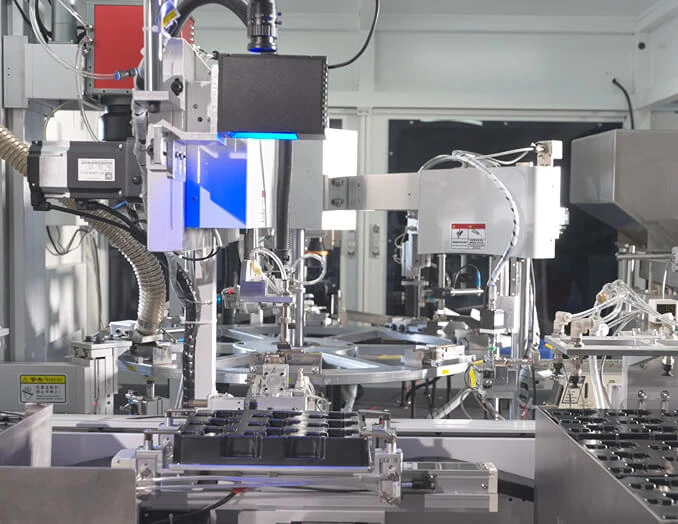
Before discussing price or appearance, it helps to understand how each heatsink is made. An extruded heatsink is formed by forcing aluminum—commonly 6063-T5 or 6063-T6—through a die. The resulting profile can include a base and parallel fins in one continuous piece. It is efficient for repeatable production, especially when the cross-section remains constant along the extrusion length.
A stacked-fin heatsink uses multiple thin aluminum or copper plates, often bonded, brazed, soldered, or mechanically assembled to a base. Because each fin is produced separately, the designer can use thinner material and create a larger fin area within a similar footprint. Copper may be used at the base or throughout the fin pack when spreading heat from a small, high-flux processor is critical.
The manufacturing difference affects more than the purchase price. Extrusion generally offers simpler assembly and consistent mechanical strength. Stacked fins offer greater freedom in fin pitch, fin height, material selection, and airflow orientation. The best choice changes when the server moves from a 1U chassis with limited vertical clearance to a 4U GPU server with higher allowable airflow and power consumption.
Thermal resistance is normally expressed as °C/W. A simplified component-to-air relationship is:
Tcase − Tair = P × RθCA
If a processor dissipates 350 W and the complete case-to-air thermal resistance is 0.12 °C/W, the estimated temperature rise is 42°C before considering sensor offset and transient behavior. Reducing resistance to 0.08 °C/W lowers the theoretical rise to 28°C, a 14°C improvement. That difference can determine whether the server maintains its rated clock speed or enters power and thermal throttling.
However, RθCA is not a universal number. It depends on airflow, inlet temperature, fan control, test orientation, TIM thickness, mounting pressure, and whether the test uses a heater block or an actual processor. A credible supplier should state the test airflow in CFM or m/s, pressure drop in Pa, heat load in watts, and boundary conditions.
| Parameter | Stacked-Fin Heatsink | Extruded Heatsink | Why It Matters in a Server |
|---|---|---|---|
| Typical material options | Aluminum fins, copper fins, copper base, hybrid construction | Usually 6063 aluminum alloy; copper inserts are possible but less typical | Copper improves spreading, while aluminum reduces mass and cost |
| Fin thickness | Often approximately 0.2–0.8 mm, depending on process | Commonly approximately 0.8–2.5 mm, depending on profile and height | Thinner fins increase area but may raise manufacturing and handling risk |
| Fin density | Can be high and customized for restricted spaces | Moderate; limited by extrusion die strength and release requirements | High density is useful only when the fan can overcome the added pressure drop |
| Airflow direction | Can be designed for cross-flow or parallel-flow layouts | Usually follows the extrusion profile and may be less flexible | Flow alignment affects bypass air and local hot spots |
| Thermal resistance potential | Strong potential at high heat flux and limited footprint | Strong performance for moderate-to-high loads with adequate airflow | Actual performance must be verified under the server’s fan curve |
| Pressure drop | Can be higher with narrow pitch and deep fins | Often predictable, but dense profiles can also create substantial resistance | Higher pressure drop can increase fan power, noise, and operating cost |
| Mechanical strength | Depends on bonding and fin-to-base construction | High structural integrity because the profile is continuous | Important for vibration, shipping, clip loading, and repeated service |
| Production economics | Higher tooling and assembly cost, especially for small volumes | Usually lower unit cost at established volume | Tooling amortization can change the result at 1,000 or 10,000 units |
As the specification becomes more practical, the server form factor usually determines the winner. A 1U appliance may have only 25–35 mm of usable heatsink height after the motherboard, retention mechanism, and airflow shroud are considered. In that environment, a stacked-fin design can fit more effective area into the same envelope and can be tuned to the pressure capability of high-speed 40 mm or 60 mm fans.
Stacked fins are often appropriate when the processor has a small contact area but a high heat flux. A copper base can spread heat laterally before it reaches a fine aluminum fin pack. The design is also useful when the fin direction must match front-to-back server airflow rather than the natural orientation of an extrusion.
For example, consider a 1U dual-socket server with two 280 W CPUs, inlet air at 27°C, and a fan wall capable of approximately 70–100 CFM per cooling zone. If the heatsink must remain below 0.12 °C/W at the operating airflow, a dense stacked-fin solution may provide more area within a 32 mm height limit. It still requires pressure-drop testing; a fin pitch that performs well at 100 CFM may become inefficient when the control system reduces the fans to 60 CFM.
Extruded heatsinks become attractive when the chassis offers more vertical clearance, the processor power is predictable, and the volume justifies a dedicated extrusion die. A 4U server may accommodate a 60–100 mm heatsink with a larger base and wider airflow channels. The profile can be cut to length, anodized, machined, and supplied with clips or threaded features.
In a 4U storage server using 120 W to 220 W CPUs, the lower pressure drop and simpler mounting of an extruded aluminum heatsink may deliver adequate junction temperature without the cost of a complex bonded fin assembly. The continuous aluminum structure also tolerates repeated service better when technicians remove and reinstall the heatsink during memory or accelerator upgrades.
Accelerator cards can exceed 300 W per device, and their thermal load is not always concentrated in the same location as a CPU’s heat spreader. A stacked-fin or hybrid copper-aluminum construction can be advantageous when the cooling part must cover a GPU die, memory modules, voltage regulators, or a vapor chamber interface in a restricted package.
At this stage, the supplier should provide more than a static thermal image. Ask for thermal resistance versus airflow, pressure-drop curves, base flatness, surface roughness, solder or braze integrity, pull-off strength, and thermal cycling results. For a server deployed in a hot aisle, also request data at higher inlet temperatures, such as 35°C or 40°C, rather than only a laboratory test at 25°C.
Price should be calculated as total cost of ownership rather than unit price alone. A typical prototype or low-volume stacked-fin heatsink may cost approximately US$35–US$120 per unit, depending on copper content, bonding method, machining, and test requirements. Production pricing can fall substantially after process stabilization, but tooling and assembly remain important.
An extruded aluminum heatsink may cost approximately US$8–US$45 per unit in medium or high volume, excluding custom die charges, CNC operations, anodizing, clips, and packaging. A simple extrusion die may add several hundred to several thousand US dollars, while complex profiles and secondary machining can increase both lead time and scrap risk.
| Cost item | Stacked-fin design | Extruded design |
|---|---|---|
| Initial tooling | Low to moderate for standard plates; higher for custom bonding fixtures | Dedicated extrusion die commonly required |
| Prototype speed | Often faster when fins and base can be cut from existing stock | Depends on die fabrication and extrusion scheduling |
| Low-volume unit cost | Usually higher because of assembly labor | Can be economical if a suitable profile already exists |
| High-volume repeatability | Requires tight control of bond-line thickness and fin alignment | Generally strong because the profile is continuous |
| Hidden operating cost | Potentially higher fan power if fin density creates excess pressure drop | Potentially higher mass or larger size when more area is required |
Onlink can be considered when a project needs a custom thermal cooling parts manufacturer capable of discussing drawings, materials, machining, surface treatment, and thermal validation in one development process. The sensible purchasing step is to request matched samples: one stacked-fin prototype and one extruded prototype tested on the same heater block, with the same TIM, mounting force, airflow, and inlet temperature.
Engineers rarely judge a heatsink by laboratory temperature alone. In field discussions, three recurring observations appear: whether the fan curve remains stable, whether the mounting hardware survives service, and whether temperatures stay consistent across production units.
One anonymized server integrator case involved a 2U compute platform that initially used a dense stacked-fin cooler. At approximately 80 CFM, the processor temperature was acceptable, but the fan controller increased speed sharply when the inlet temperature rose above 32°C. The team changed the fin pitch and reduced airflow resistance. The measured fan speed fell by roughly 12% during the same workload, while processor temperature increased by less than 2°C. The lesson was not that fewer fins are always better; it was that thermal resistance and pressure drop must be optimized together.
In another field report from a storage-system builder, an extruded heatsink reduced procurement complexity and maintained stable temperatures on a 165 W processor. The continuous profile made clip alignment straightforward, and technicians reported fewer damaged fins during installation. The limitation appeared when the same platform was upgraded to a 240 W CPU: the existing base spreader and fin area could not maintain the target temperature without a larger fan speed increase. The company moved to a hybrid base-and-fin design for the higher-power version.
These examples reflect common user feedback rather than a universal product ranking. Stacked fins tend to receive favorable comments for compact high-flux applications, while extrusions are often preferred for predictable supply, mechanical durability, and cost control. Any supplier review should be supported by serial-production data, not only one successful prototype.
Start with the thermal target rather than the construction method. Record processor or accelerator TDP, actual package power, maximum junction temperature, inlet temperature, chassis height, fan model, available airflow, acoustic limit, mounting load, and expected service cycles.
Next, define measurable acceptance criteria. Examples include RθCA below 0.10 °C/W at 80 CFM, pressure drop below 150 Pa at the operating point, base flatness within a specified tolerance, and a maximum processor temperature of 85°C at a 35°C inlet. These numbers must be adjusted to the processor and server design, but measurable limits prevent vague claims such as “high-performance cooling.”
Then ask for a side-by-side test. The comparison should use:
Finally, review production risks. For stacked fins, inspect solder, braze, or adhesive coverage, fin-to-base contact, void percentage, and fin perpendicularity. For extrusions, inspect profile dimensions, base thickness, cut length, burrs, anodizing thickness, and any CNC-machined mounting features. A lower quotation is not economical if a 3°C temperature shift across production units causes a fan-profile redesign.
A stacked fin heatsink for high-power CPU cooling is generally suitable for compact 1U servers, GPU accelerators, and applications requiring high area density or copper heat spreading. An extruded aluminum heatsink for rack server thermal management is generally suitable for 2U–4U platforms, stable production volumes, moderate heat flux, and projects that prioritize structural strength and cost. The right custom thermal cooling parts manufacturer should verify thermal resistance, airflow impedance, and heat dissipation at the actual fan operating point, not merely provide a nominal wattage rating.
Choose stacked fins when compact thermal performance justifies additional assembly and testing. Choose extrusion when the profile fits, the load is predictable, and repeatable manufacturing matters more than maximum fin density. If the result remains uncertain, ask Onlink or another qualified supplier for matched prototypes and a documented thermal test before approving the production tool. The next practical step is to prepare your power, airflow, dimensional, and temperature requirements and request a comparative quotation with test conditions included.


