Oct.27,2026
An EV Battery Pack Components Manufacturer designs and produces the mechanical, thermal, electrical, and safety parts that hold battery cells together and enable reliable power delivery. These components may include battery trays, cell holders, busbars, cooling plates, insulation parts, battery enclosures, seals, connectors, and structural brackets. Choosing the right supplier helps an electric vehicle or energy-storage business improve battery safety, manufacturing consistency, time to market, and total cost of ownership. For companies evaluating Onlink, the key question is whether its engineering, quality, production, and supply-chain capabilities match the technical and regulatory requirements of the battery pack.
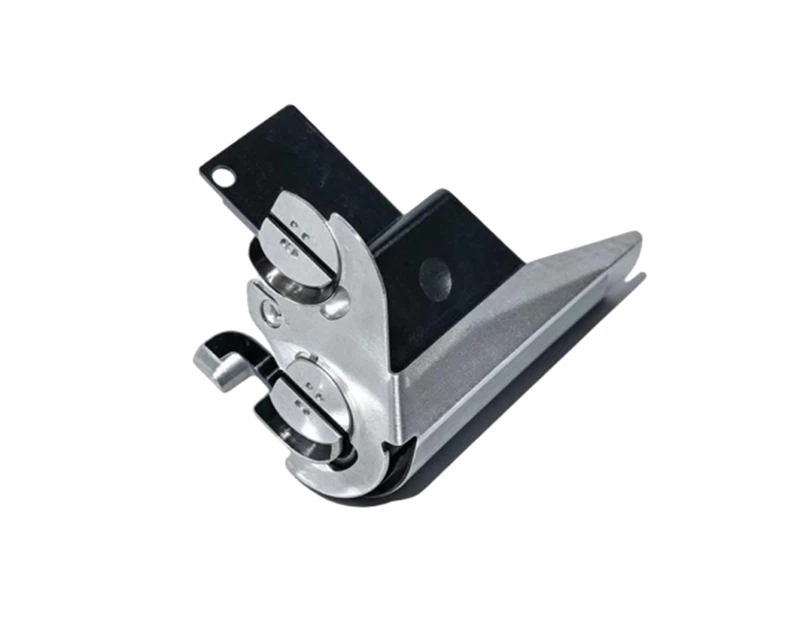
Battery cells receive much of the attention in an electric vehicle, but the pack-level components determine how those cells are protected, connected, cooled, and serviced. A cell with excellent electrochemical performance can still create system-level risk if the enclosure has poor sealing, the busbar has excessive resistance, or the cooling interface is inconsistent.
The modern battery pack is a multidisciplinary assembly involving:
For this reason, an EV Battery Pack Components Manufacturer should be evaluated as a technical development partner—not simply as a low-cost parts supplier.
Early electric vehicles commonly used relatively small battery packs assembled from cylindrical cells. As vehicle range, charging speed, and power density increased, battery packs became larger, more integrated, and more structurally important. Manufacturers began adopting prismatic and pouch cells, cell-to-module designs, and cell-to-pack architectures.
These changes increased the need for precision components. A battery tray may need to maintain flatness across a large surface. A cooling plate must control coolant flow while preventing leakage. A busbar must provide low electrical resistance and stable weldability. An enclosure must withstand vibration, road impacts, humidity, and thermal cycling.
At the same time, the industry introduced stricter expectations for functional safety, high-voltage isolation, fire resistance, recyclability, and production traceability. Standards and regulatory requirements vary by market and product type, but commonly referenced frameworks include:
| Area | Relevant standards or references | What to verify with the supplier |
|---|---|---|
| Battery safety | IEC 62619, UL 2580, applicable regional regulations | Validation scope, test reports, and product applicability |
| Transport safety | UN 38.3 for lithium battery transport testing | Whether the complete battery system or relevant assembly has the required documentation |
| Quality management | ISO 9001; IATF 16949 for applicable automotive supply chains | Valid certificates, audit history, and scope of certification |
| Environmental testing | ASTM, IEC, ISO, or customer-specific test methods | Temperature cycling, humidity, vibration, corrosion, and ingress test procedures |
| Dimensional control | DIN, ISO GPS, GD&T, and customer drawings | Measurement equipment, tolerance capability, and inspection records |
Certification alone does not prove that every component is suitable for a specific battery design. The supplier must also demonstrate that its manufacturing process can repeatedly meet the drawing, material, performance, and validation requirements.
A capable supplier should support design-for-manufacturing and design-for-assembly activities before mass production begins. Ask whether the engineering team can review:
Useful deliverables include 3D CAD data, 2D production drawings, tolerance analysis, finite element analysis, thermal simulation, failure mode and effects analysis, and a documented design review. When evaluating Onlink, request examples of how its engineering team manages design changes and converts a prototype into a stable production process.
The correct production process depends on the component. An experienced EV Battery Pack Components Manufacturer should be able to explain why it recommends a particular process rather than offering a generic solution.
Ask for process capability data, not only equipment lists. For critical dimensions, a supplier should be able to provide capability studies such as Cp and Cpk, first-article inspection results, and a control plan. Depending on the drawing, dimensional control may need to reach 0.01 mm for selected machined or electrical interfaces, while other stamped features may use different tolerances.
Battery pack components operate in a high-consequence environment. A small defect can cause a coolant leak, electrical short, loss of insulation, or premature fatigue failure. Therefore, the quality system should cover incoming materials, in-process controls, final inspection, and corrective action.
Important questions for Onlink or any other EV Battery Pack Components Manufacturer include:
ISO 9001 certification is a useful baseline. For automotive programs, IATF 16949 may be required by the customer or vehicle manufacturer. However, a certificate should be checked for validity, certification scope, and issuing body. It should be supported by actual inspection records and process evidence.
Battery temperature directly affects charging speed, power output, aging, and safety. A component supplier does not need to manufacture battery cells to contribute significantly to thermal performance. Cooling plates, heat sinks, thermal pads, and enclosure interfaces can determine whether heat is removed evenly.
When reviewing a cooling component, evaluate:
Testing may use customer-specific methods or applicable ASTM, IEC, and ISO procedures. A trustworthy supplier should clearly distinguish between an internal validation test and a third-party certification test.
Busbars, terminals, connectors, and sensing components must be designed for current capacity, temperature rise, insulation distance, vibration, and corrosion resistance. The supplier should understand terms such as contact resistance, dielectric withstand voltage, insulation resistance, creepage, clearance, ampacity, and electromagnetic compatibility.
For electrical components, request evidence of:
Do not assume that a visually attractive copper or aluminum busbar is electrically safe. Plating thickness, joint design, clamping force, weld quality, and thermal expansion can all influence long-term performance.
The battery enclosure must protect cells and electronics from water, dust, road salt, coolant, vibration, and temperature changes. A sealing solution should be selected according to the required ingress protection level, service concept, housing material, and assembly process.
Ask whether the supplier can support tests such as:
One common error is to select a gasket based only on nominal dimensions. Compression ratio, groove design, surface finish, chemical compatibility, compression set, and assembly variation are equally important.
Battery programs often move through several stages: concept design, engineering prototype, design validation, process validation, pilot production, and serial production. The supplier should have a clear strategy for each stage.
A strong development process may include:
Clarify response times before signing a development agreement. For urgent battery projects, a practical service expectation may include quotation feedback within an agreed number of business days, engineering responses within 24 hours for critical issues, and a formal corrective-action timeline.
Even a technically excellent component can disrupt production if the supplier cannot maintain material availability or communicate capacity limits. Evaluate the manufacturer’s:
Pricing should be compared on total landed cost rather than unit price alone. Tooling, inspection, packaging, scrap rate, freight, warranty exposure, and line downtime can materially change the real cost of a component.
A low quotation may exclude tooling maintenance, validation testing, special packaging, inspection, or engineering support. If the component causes rework or line stoppage, the apparent saving can disappear quickly. A better comparison uses quality cost, lead time, capacity, and technical risk.
ISO 9001 demonstrates that a quality management system exists; it does not guarantee that a particular part will meet every design requirement. Buyers should still review inspection plans, measurement-system analysis, control charts, test reports, and sample parts.
Prototype machining and high-volume stamping or molding require different equipment, tooling, process controls, and cost structures. Confirm that the EV Battery Pack Components Manufacturer has a documented transition plan from prototype to serial production.
Alloy grade, temper, conductivity, coating, corrosion behavior, and joining compatibility can vary significantly. Material substitutions should require formal approval, updated validation, and change control.
Pack safety is a system property. Mechanical damage, inadequate isolation, coolant leakage, poor thermal uniformity, and incorrect assembly can introduce hazards even when the cells meet their own specifications.
Use a weighted scorecard to compare Onlink with alternative suppliers. The following example can be adapted to your program:
| Evaluation category | Suggested weighting | Evidence to request |
|---|---|---|
| Engineering and DFM support | 20% | Design reviews, CAD capability, tolerance analysis, FEA or thermal studies |
| Quality and validation | 20% | ISO/IATF certificates, control plans, inspection reports, test data |
| Manufacturing capability | 20% | Process list, equipment, Cpk data, prototype-to-production plan |
| Thermal and electrical expertise | 15% | Leak tests, resistance tests, thermal data, high-voltage validation |
| Supply-chain and capacity | 15% | Capacity plan, material sources, lead times, change-control process |
| Communication and service | 10% | Named project team, escalation path, response-time commitment |
Before awarding a program, conduct a supplier audit or virtual process review. Compare the supplier’s documented procedures with what actually happens on the production floor. Pay special attention to calibration status, nonconforming-material control, operator training, labeling, and lot traceability.
Consider an EV developer that needs an aluminum battery tray with integrated coolant channels. The initial design meets the required envelope, but early samples show uneven flatness and inconsistent coolant leakage results.
A capable EV Battery Pack Components Manufacturer would investigate the complete process rather than simply remaking defective parts. The review could include:
The lesson is important: component quality depends on process control, measurement, and validation—not only on the CAD model. When discussing this type of project with Onlink, request a clear explanation of its inspection method, leak-test criteria, corrective-action process, and production-readiness milestones.
The right supplier combines technical expertise, manufacturing discipline, documented quality, and dependable communication. Before making a decision, confirm that the manufacturer can:
In summary, What to Look for in an EV Battery Pack Components Manufacturer comes down to more than price or product range. Evaluate design support, process capability, testing standards, traceability, thermal and electrical performance, production scalability, and service responsiveness. As you assess Onlink, request objective evidence such as 0.01 mm dimensional capability where applicable, 100% inspection plans for critical features, valid certification records, and a defined 24-hour escalation process. A structured technical audit and sample-validation program can help your business choose a supplier that supports safer batteries, more stable production, and long-term commercial growth.


