Aug.31,2026
When a buyer searches for braided sleeve, heat shrink, or corrugated tube for wiring harness protection, the real question is rarely which product is strongest in isolation. The buyer usually wants to know which protection method will survive heat, vibration, moisture, abrasion, tight bends, installation limits, and long service intervals at an acceptable total cost.
For a Custom Automotive Wiring Harness Manufacturer, the most useful comparison must connect material specifications with actual harness performance. Onlink evaluates the three solutions from the perspective of installation, electrical reliability, environmental resistance, serviceability, and suitability for different wiring harness applications.
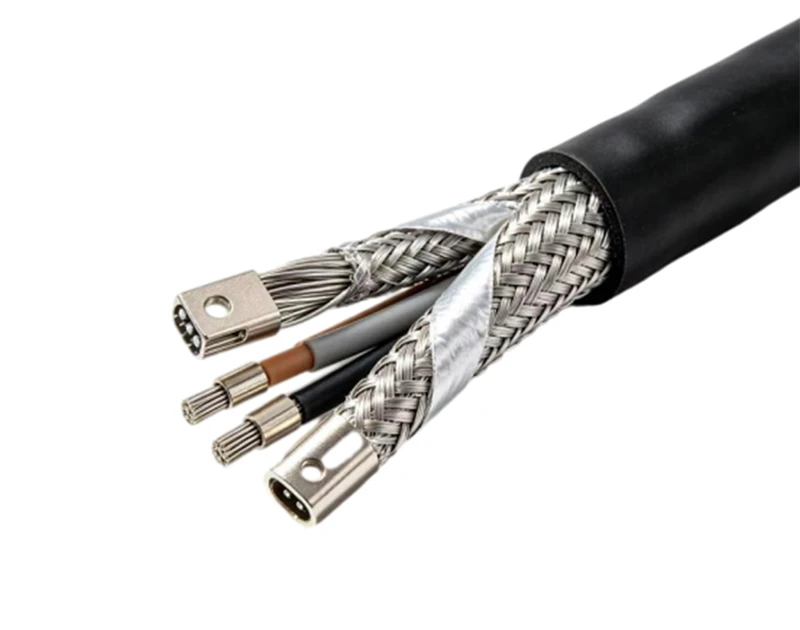
Users comparing these three products are usually trying to avoid a wiring failure caused by abrasion, heat, water, chemicals, incorrect routing, or poor installation. They need a practical recommendation rather than a general description of plastic and textile materials.
Therefore, a useful article must compare measurable parameters, explain installation behavior, describe long-term use experience, and identify the user group that benefits from each solution.
Material type alone does not determine harness life. A braided sleeve may perform well against abrasion but provide limited sealing. Heat shrink may create a compact and stable assembly but make later repairs more difficult. Corrugated tube may provide strong mechanical protection while requiring clips, tape, or connectors to prevent movement.
The correct choice depends on the complete operating environment, including temperature, bending radius, water exposure, chemical contact, vibration level, service access, harness shape, and production volume.
| Parameter | Braided Sleeve | Heat Shrink | Corrugated Tube |
|---|---|---|---|
| Primary material | Polyester, PET, nylon, fiberglass, or specialized textile blend | Polyolefin, fluoropolymer, elastomer, or adhesive-lined compound | Polypropylene, polyethylene, nylon, or high-temperature engineering plastic |
| Typical temperature range | About -50 C to 150 C, with specialty versions reaching higher temperatures | About -55 C to 135 C for common polyolefin products, with specialty grades exceeding 200 C | About -40 C to 135 C for common automotive grades, with high-temperature grades available |
| Abrasion resistance | Good to excellent, depending on weave density and yarn type | Good after shrinking, but vulnerable if cut, punctured, or exposed to sharp edges | Very good because the ribbed wall maintains a physical barrier around the harness |
| Flexibility | Excellent for branching, curves, and moving harnesses | Moderate after shrinking; less flexible when thick or adhesive-lined | Good in a straight path, but bending stiffness increases with diameter and wall thickness |
| Water resistance | Low to moderate unless coated or tightly woven | Good, especially with adhesive-lined products and sealed ends | Moderate; the tube protects against splash but does not automatically seal the ends |
| Heat resistance | Moderate to excellent depending on fiber selection | Moderate to excellent depending on polymer type | Moderate to excellent depending on polymer type and wall design |
| Noise reduction | Good for reducing rubbing and harness rattle | Good after shrinking because the harness becomes tightly consolidated | Moderate; the tube can rattle against nearby structures without clips or cushioning |
| Branching capability | Excellent and easy to adapt around branches | Limited unless separate pieces and branch seals are designed | Good with split tubing, branch fittings, or carefully planned routing |
| Inspection and repair | Very easy to open, slide, or remove | Difficult to remove without cutting and replacing the material | Easy with split tube or removable clips; moderate with closed tube |
| Installation tools | Scissors, hot knife, tape, or end termination | Heat gun, controlled heating equipment, and suitable end termination | Cutting tool, clips, tape, or retaining accessories |
| Installation speed | Fast for complex harnesses | Moderate because heating must be controlled | Fast for straight or semi-structured harnesses |
| Typical cost position | Low to medium, with premium textile grades costing more | Low to high depending on shrink ratio, wall thickness, and sealing grade | Low to medium, with specialty high-temperature grades costing more |
| Best overall strength | Flexibility, appearance, branching, and abrasion control | Sealing, consolidation, and permanent protection | Mechanical shielding, crush resistance, and structured routing |
The values above are general engineering ranges rather than universal specifications. A buyer should confirm the exact temperature rating, flame performance, chemical resistance, wall thickness, shrink ratio, minimum bend radius, and test standard for the selected product.
For example, a thin polyester sleeve and a fiberglass sleeve may look similar but behave very differently near an engine. Likewise, standard polyolefin heat shrink should not be treated as equivalent to fluoropolymer heat shrink in high-temperature or chemical environments.
Braided sleeve is made from interwoven yarns that expand in diameter when pushed and contract when pulled. This structure allows the sleeve to cover harnesses with connectors, branches, and changing diameters more easily than a rigid tube.
During installation, the sleeve can be opened at one end and fed over a completed harness. A hot knife or controlled cut is often used to prevent fraying. End termination may be completed with tape, heat shrink, stitched binding, clips, or molded components.
In a moving vehicle harness, braided sleeve generally provides stable performance when the sleeve is correctly sized and the ends are secured. It reduces rubbing noise and protects insulation from repeated contact with brackets and body panels.
Its effect on vehicle battery life is indirect. The sleeve does not increase battery capacity, but it can help prevent insulation wear, intermittent shorts, and moisture-related leakage. By reducing the chance of electrical faults, it supports stable vehicle operation and reduces the risk of parasitic current caused by damaged wiring.
In high-vibration areas, the sleeve itself usually remains quiet and flexible. However, the harness still needs proper clips and strain relief. A sleeve cannot compensate for poor routing, excessive unsupported length, or a sharp metal edge.
Heat shrink tubing is installed over the harness and heated until it contracts around the wires or connector transition. The resulting assembly is compact, stable, and resistant to movement. Adhesive-lined versions melt an internal adhesive layer during heating to improve sealing at the ends.
Heat shrink is especially effective when the harness has a consistent diameter or when a connector, splice, terminal, or branch transition needs strain relief. It is less convenient when the harness has many branches or must be opened repeatedly.
When properly installed, heat shrink provides a very stable harness assembly. It is less likely than an unsecured textile sleeve to slide along the harness. This stability is valuable near connectors, battery terminals, fuse holders, and areas with repeated vibration.
Adhesive-lined heat shrink is useful where water entry is a serious concern. It can reduce moisture penetration at a splice or cable transition, but it should not be considered a complete waterproof system unless the entire assembly and termination method have been designed for sealing.
Heat shrink can support reliable electrical performance over long service periods because it helps prevent corrosion, conductor exposure, and contamination. As with braided sleeve, its effect on battery life is indirect. It helps preserve wiring integrity and reduce electrical leakage, but it does not directly improve battery energy storage or charging efficiency.
In service environments, the main limitation is repairability. Once heat shrink has contracted over a splice or branch, technicians may need to cut through the protection. This increases repair time and requires replacement material.
Corrugated tube uses a ribbed plastic wall to create a physical barrier around the wiring harness. The ribs improve bending flexibility compared with a smooth rigid tube while maintaining better crush and impact resistance than many textile sleeves.
Automotive corrugated tube is often routed through engine compartments, underbody areas, door systems, instrument panels, and equipment frames. It can be supplied as closed tubing or split tubing. Split versions are faster to install on an existing harness because the wires can be inserted through the longitudinal opening.
Corrugated tube performs well when the primary threat is physical damage. In underbody and engine compartment routing, it provides a more substantial barrier than a lightweight open-braid sleeve. It is particularly useful where harnesses may be exposed to stones, tool contact, clamps, or nearby structural components.
Stability depends heavily on retention. Clips should be placed according to the tube diameter, harness weight, vibration level, and routing geometry. Without sufficient retention, the tube can slide, rattle, and eventually rub against adjacent parts.
Corrugated tube has little direct effect on battery life. Its value is in preventing mechanical damage that could cause short circuits, communication faults, charging faults, or intermittent power loss. In a correctly routed harness, this protection can improve long-term electrical stability.
Temperature exposure should be evaluated by both continuous temperature and short-term peak temperature. A harness near an engine may experience repeated heat cycles, radiant heat, oil contamination, and vibration at the same time.
Thermal shielding may still be required when the heat source exceeds the protection material rating. No sleeve or tube should be installed directly against an exhaust component unless the design includes adequate clearance or a dedicated thermal barrier.
Water splash, standing water, fuel, oil, coolant, cleaning chemicals, and salt spray can affect protection materials differently. An open-braid sleeve may allow drainage but can also allow contaminants to reach the harness. Heat shrink can provide better sealing at a transition, while corrugated tube provides a strong outer barrier but usually remains open at the ends.
Vibration damage often occurs because a harness is allowed to move against a hard edge. The protection method must be combined with correct routing, clips, grommets, bend relief, and strain control.
Braided sleeve is effective when the harness moves or bends repeatedly. Heat shrink is effective when the goal is to lock a transition in place. Corrugated tube is effective when the harness needs a structured mechanical shield. In demanding applications, these products can be combined rather than treated as mutually exclusive options.
| Maintenance factor | Braided Sleeve | Heat Shrink | Corrugated Tube |
|---|---|---|---|
| Visual inspection | Good when weave remains clean and open | Good for external damage, but internal wires are hidden | Good if the tube is accessible and not heavily contaminated |
| Opening the protection | Easy to slide or remove | Usually requires cutting | Easy with split tube; moderate with closed tube |
| Repair time | Low | Moderate to high | Low to moderate |
| Replacement material | Usually reusable if undamaged | Usually replaced after removal | Often reusable if not cut or deformed |
| Risk of installation error | Incorrect sizing or poor end termination | Overheating or incomplete recovery | Insufficient retention or excessive bending |
The lowest purchase price is not always the lowest installed cost. Buyers should consider material, labor, tools, clips, rework, inspection, repair access, and replacement frequency.
Many durable harness designs combine the three technologies. A corrugated tube can provide outer mechanical protection, braided sleeve can manage a branch or moving section, and heat shrink can seal a splice or connector transition.
A practical combined design may follow this pattern:
This approach often produces better reliability than selecting one material for the entire harness based only on price or appearance.
| Application condition | Recommended first choice | Reason |
|---|---|---|
| Complex branching and frequent movement | Braided sleeve | Flexible, easy to route, and simple to service |
| Sealed splice or terminal | Adhesive-lined heat shrink | Provides compact strain relief and localized sealing |
| Exposed underbody harness | Corrugated tube | Provides stronger mechanical shielding |
| High-temperature zone | Specialty heat shrink, high-temperature braid, or high-temperature tube | Selection depends on actual temperature and chemical exposure |
| Harness requiring future modification | Braided sleeve or split corrugated tube | Allows easier opening and rework |
| High-vibration connector transition | Heat shrink with suitable strain relief | Reduces movement and supports the transition |
| Mixed environmental exposure | Combination of two or three methods | Addresses different risks in different harness sections |
Braided sleeve is the strongest general choice for flexibility, branching, noise reduction, and serviceability. Heat shrink is the strongest choice for compact permanent protection, strain relief, and localized sealing. Corrugated tube is the strongest choice for structured routing, crush resistance, and exposed mechanical protection.
No single option is automatically best for every wiring harness. The most reliable design considers temperature, moisture, chemicals, vibration, abrasion, movement, installation process, inspection needs, and total service cost.
For projects requiring complete design support, material selection, assembly control, and application-specific testing, a Custom Automotive Wiring Harness Manufacturer such as Onlink can help match the protection method to the final harness structure and vehicle environment.
Onlink focuses on practical wiring harness reliability rather than one-size-fits-all material recommendations. Selecting the correct combination of braided sleeve, heat shrink, corrugated tube, terminals, seals, clips, and routing features can improve electrical stability, reduce maintenance risk, and protect the harness throughout its intended service life.


