Aug.31,2026
Choosing the right Electrical Steel Grades for Motor Cores can decide a motor’s efficiency, temperature, noise level, and service life. An experienced Electric Motor Core Parts Manufacturer can help OEM teams compare grade, thickness, coating, and magnetic performance before production starts. This guide also explains how to select a custom motor lamination supplier and how electrical steel affects motor core cost and performance.
Motor cores operate under alternating magnetic fields. If the steel has high magnetic loss, part of the input energy becomes heat instead of useful mechanical power. The result can be a hotter motor, lower efficiency, larger cooling requirements, and shorter insulation life. For this reason, electrical steel selection should be made together with the motor design, stamping method, operating frequency, and target efficiency class.
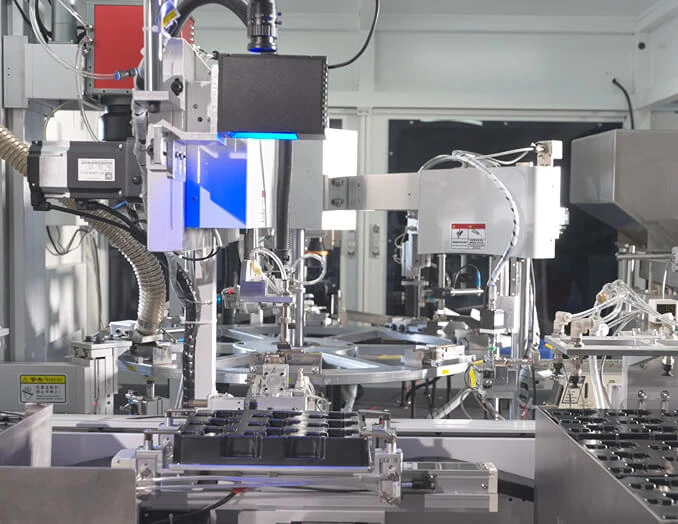
Electrical steel, also called silicon steel or magnetic steel, is a steel product designed to carry changing magnetic flux with lower energy loss than ordinary carbon steel. For most rotating motors, the material is supplied as thin, coated laminations rather than as one solid block.
The main material groups are:
In North American purchasing documents, OEM buyers may see designations such as M19, M27, or M36. These are commonly used grade families for non-oriented electrical steel. The exact performance depends on gauge, surface coating, processing route, and the supplier’s specification. A grade name alone is not enough for a reliable comparison.
A motor core experiences two main types of magnetic loss:
Total core loss is commonly reported in watts per kilogram, or W/kg, under a defined magnetic flux density and frequency. A test result is meaningful only when the test conditions are stated. For example, a loss value measured at 1.5 tesla and 50 Hz should not be compared directly with a value measured at 1.7 tesla and 60 Hz.
Electrical steel also affects:
The U.S. Department of Energy explains that motor efficiency is influenced by electrical, magnetic, mechanical, and thermal losses. The DOE’s motor and pump guidance is a useful reference when setting the efficiency target for a new product.
Common motor lamination thicknesses include approximately 0.35 mm, 0.50 mm, and 0.65 mm. Thinner material generally helps reduce eddy-current loss, especially as electrical frequency increases. However, thin steel can cost more and may require better stamping control.
For a high-speed motor or inverter-driven motor, ask the supplier to compare at least two gauges under the actual operating frequency. A 0.35 mm grade may not automatically deliver a better system result if the stamping burr, fill factor, or material price becomes unfavorable.
Ask for the following information on the material certificate or test report:
IEC 60404-2 defines methods for determining the magnetic properties of electrical steel strip and sheet by using an Epstein frame. ASTM A677 covers non-oriented electrical steel used for magnetic applications. These standards help buyers compare results from different mills and suppliers.
Magnetic permeability describes how easily the material carries magnetic flux. High permeability can reduce the magnetizing current required by the motor. Saturation occurs when additional magnetizing force produces only a small increase in flux. A design operating too close to saturation may show higher current, more heat, and increased waveform distortion.
Do not select steel only by the lowest W/kg value. The motor designer should also check the B-H curve, saturation point, torque ripple, current demand, and field-weakening range.
Each lamination normally has an insulating coating. The coating limits electrical contact between adjacent sheets and reduces circulating eddy currents in the stacked core.
Important coating questions include:
A coating that looks acceptable before stamping may be damaged by excessive punch clearance, tool wear, or rough handling. Core-loss testing after stacking is therefore more useful than sheet inspection alone.
Motor laminations often include narrow bridges, small slots, ventilation holes, and complex profiles. The material must support clean stamping without excessive burr formation.
Ask the electric motor core parts manufacturer about:
A common engineering target is to keep burr height low enough that adjacent laminations do not create an electrical short. The exact limit should be written into the drawing or quality agreement because it depends on motor size, voltage, frequency, and the customer’s core-loss requirement.
| Grade group | Typical use | Main benefit | Buyer caution |
|---|---|---|---|
| General-purpose NOES | Fans, pumps, standard induction motors | Balanced cost and magnetic performance | May not meet high-speed or premium-efficiency targets |
| Low-loss NOES | IE3/IE4-class motors, EV auxiliaries, high-efficiency drives | Lower core loss at defined test conditions | Higher material cost and tighter processing requirements |
| Thin-gauge NOES | High-frequency inverter motors and high-speed machines | Reduced eddy-current loss | More sensitive to handling, stamping, and burr control |
| Semi-processed steel | Cost-focused high-volume motor production | Potentially lower raw material price | Requires controlled final annealing after stamping |
| Grain-oriented steel | Transformer and selected stationary magnetic devices | Very strong magnetic performance in the rolling direction | Usually unsuitable for the changing directions found in rotating cores |
Grade labels vary by market and steel mill. A European EN designation, an ASTM designation, and a supplier’s commercial name may describe similar material but are not automatically interchangeable. The procurement document should list the governing standard, thickness, maximum core loss, minimum magnetic induction, coating type, and tolerance.
Industrial motors for pumps, fans, conveyors, compressors, and machine tools often operate at 50 or 60 Hz. Buyers usually balance purchase price, efficiency class, production volume, and long-term energy use. A low-loss NOES grade can be useful when the motor operates for thousands of hours each year.
Permanent-magnet motors use a laminated stator and often a laminated rotor. The steel must support high magnetic flux while limiting loss at the operating speed and electrical frequency. Rotor bridges and thin sections also make stamping accuracy important.
Traction motors may run across a wide speed range and may use high-frequency pulse-width modulation from the inverter. The correct steel choice must consider electrical frequency, mechanical strength, thermal cycling, rotor stress, and high-speed loss. A grade that works well in a 50 Hz pump motor may not be suitable for a high-speed traction motor.
Generators require stable magnetic performance and accurate stacking. The supplier should control lamination geometry, insulation resistance, stack height, and clamping pressure to keep the air gap and magnetic circuit consistent.
Small motors used in refrigerators, air conditioners, washing machines, power tools, and office equipment are highly sensitive to cost. In these products, an economical grade with efficient strip nesting and a high stamping yield may provide better total value than the lowest-loss premium grade.
The material grade is only one part of core performance. A qualified supplier should control the full process from incoming steel to finished stack.
For high-volume programs, request a first-article inspection report and a process capability study. Critical dimensions should be measured with calibrated equipment. If the motor has a strict acoustic or efficiency target, the supplier should also support prototype motor testing rather than relying only on raw steel data.
Before requesting a quotation, prepare the following information:
Then ask each supplier to quote the same specification. The quotation should separate raw material, tooling, stamping, stacking, testing, packaging, and freight. This makes it easier to compare total cost instead of comparing only the price per kilogram.
A lower material price may lead to higher energy loss or more difficult stamping. Compare life-cycle cost, especially for motors that run continuously.
Always record frequency, flux density, thickness, test direction, and test standard. Without these details, two W/kg values may not be comparable.
Variable-speed motors can experience a higher electrical frequency than the rated line frequency. Ask for loss evaluation at the actual speed and modulation range.
The stator and rotor may have different flux patterns, stress levels, and loss mechanisms. The motor designer should confirm whether one grade is suitable for both parts.
Burrs can reduce the effective magnetic area and create electrical shorts between laminations. Define a measurable burr limit and inspect it during production.
A material substitution can change core loss, dimensions, press force, tool wear, and motor temperature. Require written approval and sample testing before any grade change.
Onlink supports OEM buyers that need motor laminations, stator cores, rotor cores, and related electric motor core parts. The supplier selection process should focus on more than the ability to cut a steel profile. It should include material traceability, stamping precision, stacking control, inspection data, and communication during design changes.
When contacting Onlink, provide the motor drawing, target output, operating frequency, speed range, annual demand, and required standard. The engineering team can then help compare electrical steel grades, lamination thickness, tooling options, and core assembly methods. A prototype review before mass production can identify magnetic or dimensional risks at an earlier stage.
Non-oriented electrical steel is the usual choice for rotating motor cores because the magnetic field changes direction around the stator and rotor. The exact grade depends on frequency, flux density, efficiency target, mechanical design, and cost.
No. Thinner steel can reduce eddy-current loss, but it may increase material and stamping cost. It can also require tighter handling and tool control. The best thickness is the result of a motor-level comparison.
M19 is a commonly used North American designation for a family of non-oriented electrical steel products. The full specification must still state thickness, core-loss requirement, magnetic induction, coating, and applicable ASTM requirements.
Laser cutting is useful for prototypes and low-volume development because it avoids immediate hard tooling. Stamping is usually more economical for high-volume production and can provide faster cycle times when the die is properly designed. Laser heat effects and stamping burrs should both be considered during validation.
Review the steel grade, lamination thickness, coating, stacking factor, burr height, core pressure, air gap, and magnetic flux density. Core loss can also increase after stamping if the material is heavily stressed or if the coating is damaged.
Typical documents include the material mill certificate, dimensional inspection report, magnetic test report, coating information, first-article report, process records, and certificate of conformity. Additional documents may be required for automotive or safety-critical applications.
Onlink can be considered for custom stator laminations, rotor laminations, assembled motor cores, and related components. Send the latest drawing and performance requirements for a technical review, quotation, and prototype discussion.
The right electrical steel grade should be validated in the finished core, not selected from a catalog title alone. Start with the motor operating data, define the core-loss test point, compare two or three suitable grades, and inspect the stamped and stacked samples. This process helps control efficiency, heat, noise, and production yield.
For OEM buyers looking for an electric motor core parts manufacturer for custom laminations, contact Onlink with your drawing and target specifications. A documented material comparison and prototype test can provide a safer path to stable mass production.


