Choosing an Electric Motor Core Parts Manufacturer for a high-volume project requires more than comparing unit prices. Purchasing teams must confirm technical capability, stable capacity, process control, delivery reliability, cost transparency, and long-term risk management. This guide provides a practical, step-by-step evaluation method that procurement, engineering, quality, and operations teams can use before approving a supplier.
1. Define the motor core requirements before contacting suppliers
Convert the motor design into measurable purchasing specifications
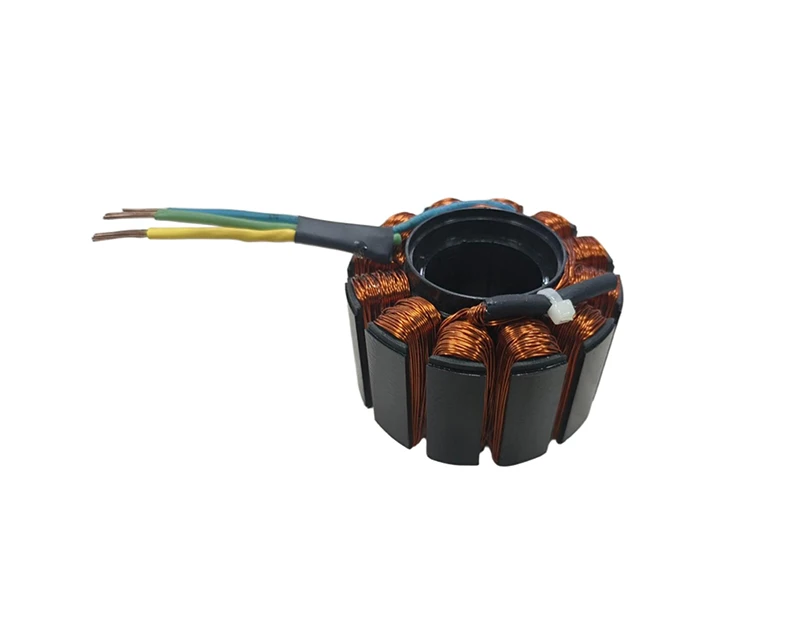
The first step is to create a complete technical requirement document. An Electric Motor Core Parts Manufacturer cannot provide a reliable quotation or feasibility assessment if the buyer only supplies a general drawing or annual volume estimate.
Include the following information:
- Motor type, such as induction motor, permanent magnet motor, brushless DC motor, or switched reluctance motor.
- Core component type, such as stator core, rotor core, laminated stack, punched laminations, segmented core, or assembled core.
- Material grade and thickness of electrical steel.
- Required magnetic performance and loss targets.
- Outer diameter, inner diameter, slot geometry, stack length, and critical tolerances.
- Number of slots, poles, teeth, keyways, holes, and balancing features.
- Stacking method, such as welding, riveting, bonding, interlocking, or clamping.
- Surface treatment, insulation coating, deburring, cleaning, and corrosion protection requirements.
- Required packaging, labeling, traceability, and shipment configuration.
- Expected annual volume, monthly demand, batch size, ramp-up schedule, and forecast range.
- Applicable standards, customer-specific specifications, and regulatory requirements.
Separate critical characteristics from flexible characteristics
Not every dimension has the same effect on motor performance. Mark critical characteristics clearly so the supplier can focus inspection resources on the features that affect efficiency, vibration, noise, assembly, and service life.
Typical critical characteristics include:
- Laminate thickness and material grade.
- Stator and rotor concentricity.
- Slot width, tooth width, and slot position.
- Inner and outer diameter.
- Stack height and compression condition.
- Burr height and edge condition.
- Interlocking position and assembly strength.
- Core loss, magnetic flux, and electrical insulation performance.
Confirm volume assumptions and demand variation
High-volume projects rarely operate at one fixed quantity every month. Share the expected launch volume, steady-state volume, peak volume, minimum order quantity, and forecast accuracy. Ask suppliers to quote their capacity under normal demand and under a defined peak scenario.
A useful volume profile includes:
- Prototype quantity and target delivery date.
- Pilot run quantity and approval date.
- Monthly volume during production ramp-up.
- Annual volume at steady state.
- Peak monthly demand and expected duration.
- Safety stock requirements and emergency replenishment expectations.
2. Verify the manufacturer's production capability and capacity
Evaluate whether the factory has the correct equipment
The second step is to confirm that the manufacturer owns or controls the equipment needed for the complete production route. A supplier may have excellent stamping equipment but limited stacking, inspection, or packaging capability. This can create delays when multiple subcontractors are involved.
Review the following equipment and processes:
- High-speed or precision stamping presses.
- Progressive dies, compound dies, and fine blanking tools where applicable.
- Wire cutting, CNC machining, grinding, and die maintenance equipment.
- Automatic or semi-automatic stacking lines.
- Welding, riveting, bonding, or interlocking systems.
- Deburring and cleaning equipment.
- Dimensional inspection and vision inspection systems.
- Magnetic performance and core loss testing equipment.
- Packaging and palletizing equipment.
Check available capacity using realistic production data
Do not accept capacity claims based only on the number of machines installed. Request practical capacity data that accounts for changeover time, maintenance, scrap, tooling limits, labor availability, and current customer commitments.
Ask the supplier to provide:
- Number of machines available for the proposed part.
- Press tonnage and maximum material width.
- Strokes per minute and effective production rate.
- Average setup and die changeover time.
- Current utilization by machine group.
- Available production hours per day and per month.
- Historical uptime and unplanned downtime.
- Historical scrap and rework rates.
- Capacity reserved for existing customers.
- Contingency capacity if demand increases by 20 percent or 30 percent.
Confirm tooling ownership and maintenance responsibility
Tooling is one of the most important risk areas in a high-volume motor core project. Confirm who owns the die, who pays for modifications, where the die is stored, and how quickly it can be repaired or transferred.
Document these points in the quotation or supply agreement:
- Tool ownership and asset identification.
- Tool design approval procedure.
- Expected tool life and preventive maintenance interval.
- Replacement parts and spare insert strategy.
- Tool repair response time.
- Responsibility for damage caused by production wear.
- Approval process for engineering changes.
- Transfer rights if the supplier cannot continue production.
3. Audit quality systems and process control
Review certifications and actual quality practices
The third step is to evaluate the manufacturer's quality system. Certifications are useful, but a certificate alone does not prove that the production process is controlled. Purchasing teams should review how the supplier handles inspection, nonconformities, corrective actions, and traceability.
Request evidence of:
- ISO 9001 certification and scope.
- IATF 16949 certification if the project is automotive-related.
- ISO 14001 certification when environmental control is required.
- Document control and engineering change control.
- Incoming material inspection.
- First article inspection and production part approval processes.
- In-process inspection and final inspection.
- Calibration management.
- Nonconforming product control.
- Corrective and preventive action records.
- Supplier quality management for steel and outsourced processes.
Ask for a control plan and process failure analysis
A professional Electric Motor Core Parts Manufacturer should be able to identify process risks before mass production. Request a process flow diagram, process failure mode and effects analysis, and control plan for the complete manufacturing route.
Review whether the control plan covers:
- Incoming electrical steel identification and thickness.
- Material coating and insulation condition.
- Die alignment and press setup.
- Critical dimensions during stamping.
- Burr height and edge damage.
- Stacking height and compression force.
- Core alignment and concentricity.
- Welding, bonding, or riveting quality.
- Final dimensional and magnetic testing.
- Packaging damage prevention.
Confirm traceability from steel coil to finished core
Traceability is essential when a high-volume project experiences a field failure or a material deviation. The supplier should be able to identify the raw material coil, production date, machine, die, operator, inspection results, and shipment batch.
Define the minimum traceability information:
- Steel mill and material heat or coil number.
- Material grade, thickness, and coating information.
- Production line and machine number.
- Tool or die identification.
- Production shift and date.
- Inspection lot and test results.
- Packaging label and shipment reference.
4. Validate samples, tooling, and production consistency
Use a staged sample approval process
The fourth step is to avoid moving directly from a quotation to full production. Use a staged validation process that allows engineering and quality teams to identify problems before large quantities are produced.
- Review the supplier's design for manufacturability feedback.
- Approve the die concept and critical dimensions.
- Inspect initial stamped samples.
- Review the first article inspection report.
- Run a pilot batch under normal production conditions.
- Measure process capability on critical characteristics.
- Perform motor assembly and functional testing.
- Approve the production part submission package.
- Release the supplier for controlled mass production.
Inspect dimensions, burrs, and stack quality
Sample approval should cover more than a few external dimensions. Measure the features that directly affect electromagnetic performance, rotor balance, assembly fit, and core durability.
Recommended checks include:
- Outer diameter and inner diameter.
- Roundness and concentricity.
- Slot and tooth dimensions.
- Hole location and keyway position.
- Laminate thickness.
- Stack height at multiple points.
- Burr height on both sides of the lamination.
- Interlock position and strength.
- Weld or rivet condition.
- Surface damage and corrosion.
- Core distortion after stacking.
Measure process capability on critical features
Use statistical process control rather than relying only on a pass or fail inspection. Request capability data for critical characteristics from a representative pilot run. The required capability target should be agreed before production, especially when the parts will be used in precision or automotive motors.
Review:
- Sample size and sampling method.
- Average value and variation.
- Control chart trends.
- Short-term capability.
- Long-term capability.
- Out-of-control reaction plan.
- Measurement system accuracy and repeatability.
5. Compare total cost instead of unit price alone
Build a complete total cost of ownership model
The fifth step is to compare the total landed cost of each supplier. The lowest quoted unit price may become more expensive after tooling, freight, inspection, scrap, inventory, and line stoppage costs are included.
Include these cost categories:
- Part price.
- Electrical steel cost and material surcharge.
- Progressive die or stamping tool cost.
- Stacking and assembly cost.
- Inspection and testing cost.
- Packaging and labeling cost.
- Freight, insurance, duties, and customs charges.
- Engineering and sample charges.
- Tool maintenance and repair cost.
- Expedited shipment cost.
- Inventory carrying cost.
- Scrap, rework, and quality claim exposure.
- Cost of production downtime caused by late or defective parts.
Review the quotation for hidden commercial risks
A clear quotation should state assumptions instead of leaving important details open. Ask suppliers to identify the validity period, material price adjustment method, minimum order quantity, payment terms, lead time, packaging standard, and conditions for price changes.
Check the following items:
- Whether the quoted price is based on a specific steel grade and thickness.
- Whether material price fluctuations can change the unit price.
- Whether the quotation includes tooling amortization.
- Whether inspection reports are included.
- Whether the price changes at different annual volumes.
- Whether delivery terms are quoted consistently across suppliers.
- Whether rejected parts can be replaced without additional charges.
- Whether engineering changes create additional tooling fees.
Balance price with quality and delivery performance
Use a weighted supplier scorecard instead of selecting the cheapest offer. A practical scoring model can assign 25 percent to quality, 20 percent to capacity, 20 percent to technical capability, 15 percent to delivery, 10 percent to total cost, and 10 percent to communication and risk management.
Adjust the weighting according to project priorities. For a safety-critical motor, quality and traceability should receive more weight. For a fast product launch, tooling lead time and production readiness may be more important.
6. Assess delivery reliability, communication, and business continuity
Verify the supplier's historical delivery performance
The sixth step is to determine whether the supplier can deliver consistently at the required volume. Ask for performance data from similar high-volume programs rather than relying on general statements about experience.
Review:
- On-time delivery rate for the previous 12 months.
- Average lead time and lead time variation.
- Typical response time to urgent requests.
- Past customer complaints and corrective action performance.
- Production ramp-up experience.
- Ability to support weekend or emergency production.
- Export documentation and customs experience.
- Performance during material shortages or logistics disruptions.
Confirm production planning and inventory controls
High-volume purchasing teams need visibility before a shortage occurs. Confirm how the supplier converts forecasts into material purchases, production schedules, and finished goods inventory.
Ask about:
- Forecast sharing and order confirmation procedures.
- Raw material safety stock.
- Work-in-process controls.
- Finished goods safety stock.
- Capacity reservation agreements.
- Shortage escalation procedures.
- Production schedule updates.
- Backup suppliers for electrical steel and outside processes.
Evaluate business continuity and contingency planning
A supplier should have a documented response plan for equipment failure, power interruption, labor shortage, fire, flood, cyberattack, raw material shortage, and transportation disruption.
Request evidence of:
- Backup production equipment or qualified alternate facilities.
- Emergency die repair capability.
- Alternative raw material sources.
- Data backup and cybersecurity controls.
- Business interruption insurance where applicable.
- Emergency communication contacts.
- Recovery time and recovery quantity targets.
- Periodic testing of the continuity plan.
7. Use a structured supplier audit and final approval process
Prepare the required evaluation tools
A structured evaluation prevents different suppliers from being judged by different standards. The following tools are useful for purchasing, engineering, and quality teams.
- Technical requirement specification.
- Supplier request for quotation document.
- Supplier capability questionnaire.
- Factory audit checklist.
- Process flow diagram review form.
- Process failure mode and effects analysis review form.
- Control plan review form.
- First article inspection template.
- Dimensional inspection report.
- Material certificate verification checklist.
- Supplier scorecard.
- Total cost of ownership calculator.
- Capacity calculation worksheet.
- Risk register and mitigation plan.
- Production part approval checklist.
- Corrective action request template.
Follow a step-by-step supplier evaluation workflow
Use the following workflow when selecting an Electric Motor Core Parts Manufacturer for a high-volume project.
- First step: Define the specification. Finalize drawings, materials, tolerances, performance requirements, packaging, annual volume, and delivery expectations.
- Second step: Prequalify suppliers. Shortlist manufacturers with relevant motor core experience, suitable equipment, quality certifications, and export capability.
- Third step: Issue a consistent RFQ. Send the same technical package, forecast, quality requirements, and commercial terms to each candidate.
- Fourth step: Review quotations. Compare unit price, tooling, material assumptions, lead time, capacity, payment terms, and total landed cost.
- Fifth step: Conduct a technical review. Ask each supplier to explain the production process, critical risks, tooling plan, inspection method, and ramp-up schedule.
- Sixth step: Perform a factory audit. Verify equipment, process controls, material storage, inspection systems, maintenance records, and production planning.
- Seventh step: Approve tooling and samples. Review die design, inspect first articles, confirm capability data, and complete pilot production testing.
- Eighth step: Validate production readiness. Confirm approved documents, trained operators, spare tooling, inspection gauges, packaging, and capacity reservation.
- Ninth step: Negotiate the supply agreement. Include quality standards, delivery performance, change control, warranty, traceability, tooling ownership, and recovery obligations.
- Tenth step: Monitor the supplier after launch. Track quality, delivery, capacity, corrective actions, cost changes, and continuous improvement performance.
Use a clear final approval checklist
Approve the supplier only after all major risks have an owner and a documented mitigation plan. The final approval package should include:
- Approved technical drawings and specifications.
- Approved material grades and certificates.
- Completed supplier audit report.
- Approved process flow and control plan.
- Approved failure mode and effects analysis.
- First article inspection results.
- Pilot production report.
- Capability study for critical dimensions.
- Packaging and labeling approval.
- Confirmed production capacity and delivery schedule.
- Signed commercial and quality agreements.
- Business continuity and escalation contacts.
Common mistakes to avoid when selecting a high-volume supplier
Mistake 1: Selecting the lowest unit price
A low unit price may reflect lower material quality, incomplete inspection, unrealistic capacity assumptions, or excluded tooling and freight costs. Compare total cost and supplier risk instead of price alone.
Mistake 2: Relying on certificates without auditing the process
Certification confirms that a management system exists, but it does not guarantee that every critical dimension is controlled. Review actual records, inspect the production floor, and interview process owners.
Mistake 3: Accepting capacity claims without calculations
Installed machine quantity is not the same as available capacity. Require a capacity calculation that includes cycle time, uptime, changeover, scrap, maintenance, current commitments, and peak demand.
Mistake 4: Testing only a few samples
A small sample may not reveal die wear, material variation, stacking distortion, or process drift. Use a pilot batch and measure critical characteristics across different times and production lots.
Mistake 5: Ignoring burrs and magnetic performance
Parts can meet basic dimensional requirements and still cause motor losses, insulation damage, noise, vibration, or assembly problems. Include burr inspection, electrical steel verification, and relevant magnetic testing.
Mistake 6: Failing to define tooling ownership
Unclear tooling ownership can create serious delays during supplier changes or die repairs. Record ownership, location, maintenance duties, transfer rights, and access to technical data before production begins.
Mistake 7: Changing specifications informally
Uncontrolled changes to steel grade, coating, die setup, stacking method, or inspection frequency can affect motor performance. Require written approval and documented validation for every significant change.
Mistake 8: Ignoring communication and escalation behavior
A supplier that communicates slowly during sampling may create larger problems during mass production. Evaluate response time, reporting quality, problem-solving ability, and willingness to disclose risks early.
How Onlink can support a reliable motor core supply program
Use technical and purchasing teams together
Purchasing teams should not evaluate an Electric Motor Core Parts Manufacturer alone. Engineering should confirm design and magnetic requirements, quality should verify process control, and operations should confirm logistics and production continuity.
Onlink can be included in a cross-functional supplier review that covers:
- Motor core design and manufacturability.
- Electrical steel selection and material control.
- Stamping and tooling feasibility.
- Stacking and assembly requirements.
- Dimensional and magnetic inspection.
- High-volume capacity planning.
- Packaging and delivery coordination.
- Corrective action and continuous improvement.
Focus on measurable project outcomes
The best supplier relationship is based on measurable targets rather than general promises. Define expected values for quality, delivery, capacity, response time, scrap, and cost improvement, then review performance regularly after launch.
Recommended supplier performance indicators include:
- Parts per million defect rate.
- On-time delivery percentage.
- Customer complaint response time.
- Corrective action closure time.
- Scrap and rework percentage.
- Process capability on critical dimensions.
- Tool downtime and maintenance response time.
- Inventory accuracy and shipment completeness.
- Annual cost reduction or productivity improvement.
Final decision: choose the supplier with the lowest controllable risk
Make the decision using evidence
The right Electric Motor Core Parts Manufacturer should demonstrate reliable technical capability, validated production capacity, stable quality, transparent costs, responsive communication, and a practical continuity plan. The final decision should be based on factory audit results, sample data, pilot production performance, total cost, and documented risk controls.
Before signing a high-volume agreement, confirm that the supplier can meet the following conditions:
- The drawings and critical requirements are fully understood.
- The raw material source and specifications are approved.
- The tooling plan is complete and ownership is documented.
- The production line has enough verified capacity.
- Critical dimensions and magnetic properties are controlled.
- Traceability is available from material to shipment.
- Packaging and logistics requirements are validated.
- Quality and delivery targets are contractually defined.
- Backup plans exist for tooling, materials, equipment, and logistics.
- Communication channels and escalation procedures are established.
For high-volume motor programs, the best Electric Motor Core Parts Manufacturer is not simply the supplier offering the lowest quotation. It is the supplier that can repeatedly deliver conforming core parts at the required volume, cost, and schedule while reducing technical and supply chain risk. Onlink can help purchasing teams build that confidence through structured evaluation, process validation, and long-term production support.


