Sep.11,2026
Choosing between PVC vs XLPE wire insulation for automotive harnesses affects service life, heat management, and assembly cost. Engineers comparing the best wire insulation for industrial control panels usually examine automotive wire insulation temperature rating, not just purchase price. The decision also depends on polyvinyl chloride, cross-linked polyethylene, ampacity, dielectric strength, and cold-flow behavior. A PVC harness may perform reliably inside a protected cabin, while XLPE is often more suitable near engines, motors, batteries, and high-current circuits.
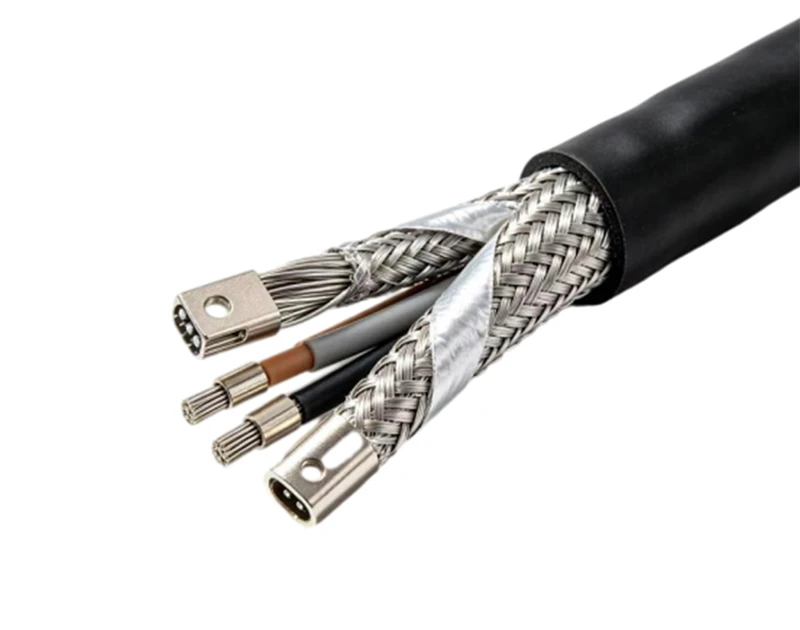
The practical problem rarely begins with a dramatic cable failure. It usually starts with a harness that becomes stiff after repeated heat cycles, develops insulation cracks near a connector, or shows increased voltage drop after years of vibration. A purchasing team may select PVC because its unit price is lower, then discover that a routing zone reaching 110°C is outside the cable’s continuous operating rating. Conversely, an industrial equipment builder may specify XLPE everywhere and add cost without receiving a meaningful benefit in a cool, stationary control cabinet.
Insulation selection should therefore follow the actual electrical, thermal, mechanical, and chemical conditions. The relevant questions are straightforward:
Onlink approaches this comparison as a harness design issue rather than a material-sales issue. The conductor size, terminal system, seal design, branch geometry, insulation thickness, and installation method must be considered together.
| Parameter | PVC Insulation | XLPE Insulation | Design Meaning |
|---|---|---|---|
| Typical continuous temperature rating | Common automotive and industrial grades range from 80°C to 105°C | Common automotive grades range from 125°C to 150°C; specialized products can be higher | XLPE provides more thermal headroom near engines, inverters, and motors |
| Short-term temperature capability | Often approximately 105°C to 125°C, depending on formulation and standard | Often approximately 150°C to 175°C, depending on formulation and standard | Peak temperature must be checked against the manufacturer’s datasheet, not assumed from the material name |
| Dielectric strength | Typically about 15–30 kV/mm for many formulations | Often about 20–30 kV/mm, with stable electrical performance across a wider temperature range | XLPE can support demanding electrical environments, but insulation thickness still determines system voltage capability |
| Flame behavior | Can be formulated for flame retardancy; some grades produce corrosive smoke when burned | Can be halogen-free and low-smoke in specialized formulations; standard XLPE is not automatically flame-retardant | Request the exact flame test result, such as VW-1, FT1, IEC 60332, or the required customer specification |
| Oil and chemical resistance | Good in selected formulations, but plasticizer migration and swelling must be evaluated | Generally strong resistance to moisture and many automotive fluids, although compatibility remains formulation-specific | Use immersion and aging data for fuel, hydraulic oil, coolant, and cleaning agents |
| Flexibility | Usually flexible over a broad normal-temperature range | Can be flexible, but some thin-wall XLPE constructions feel stiffer, especially in cold conditions | For robotic or constantly flexing applications, evaluate bend radius and cycle-life data |
| Abrasion resistance | Good in many general-purpose harnesses | Good to very good, depending on jacket and surface formulation | Neither material eliminates the need for conduit, braid, or abrasion protection at contact points |
| Insulation wall and harness size | Often requires a comparatively thicker wall for the same design target | Thin-wall designs can reduce outside diameter and mass when approved by the specification | Smaller bundles may improve routing and connector packing density |
| Processing | Commonly easier to extrude and terminate at high production volume | Requires controlled cross-linking and process verification | PVC generally supports lower initial manufacturing cost |
| Indicative material cost | Often the lower-cost option; actual harness pricing varies by copper, terminals, labor, and testing | Frequently 10%–35% higher for comparable wire constructions | XLPE may reduce total cost when thinner wire, fewer protective parts, or longer service life is achieved |
These figures are engineering ranges rather than universal guarantees. A wire marked “XLPE” is not automatically equivalent to every other XLPE wire. The final choice should be based on the complete construction, applicable standard, conductor stranding, insulation thickness, colorant package, and validation report.
Temperature is often the first dividing line. PVC is a sensible choice for dashboards, doors, seats, lighting circuits, and protected cabin routes where the measured continuous temperature remains below the cable rating. In an engine compartment, however, ambient air temperature can exceed 100°C near turbochargers, exhaust after-treatment systems, or high-load motors. A 105°C PVC wire may have little usable margin when nearby surfaces repeatedly transfer heat into the harness.
XLPE’s higher temperature capability can preserve insulation flexibility and electrical stability during repeated thermal cycling. This does not mean an XLPE cable can be routed directly against an exhaust manifold. Radiant heat, clamp pressure, and oil contamination can still accelerate failure. Correct routing, heat shields, stand-off clips, and abrasion sleeves remain necessary.
Insulation affects ampacity indirectly. The conductor carries the current, but the insulation determines the maximum allowable operating temperature. If a copper conductor is rated for 125°C rather than 105°C, the designer may obtain additional current capacity or preserve a smaller conductor size, subject to the governing standard and installation conditions.
For example, a 10 mm² copper circuit carrying 60 A through a 4-meter round-trip path has an approximate resistance of 0.0069 ohms at 20°C, producing about 0.41 V of voltage drop at 60 A. Copper resistance increases with temperature by roughly 0.393% per °C. At 100°C, the same conductor can have approximately 31% higher resistance than at 20°C. XLPE does not reduce copper resistance by itself, but its higher thermal rating can give the harness designer more room to manage conductor size and thermal derating.
PVC remains widely used in industrial control panels because fixed wiring normally experiences limited movement, moderate temperatures, and predictable routing. It is compatible with many terminal blocks, ferrules, cable ducts, and labeling systems. For a cabinet operating at 25°C to 50°C, with no unusual chemical exposure, a properly specified PVC hook-up wire can provide a practical balance of cost and performance.
XLPE becomes more attractive in motor control centers, variable-frequency drive systems, battery energy storage equipment, outdoor machinery, and compact cabinets with high heat density. Its thermal stability can be valuable where several loaded conductors are bundled together and heat cannot dissipate easily. For medium-voltage or high-voltage industrial systems, insulation design must also address partial discharge, shielding, creepage, clearance, and termination stress; simply changing PVC to XLPE is not enough.
Repeated motion changes the decision. Standard PVC wire may work in a stationary machine but fail prematurely in a drag chain if its conductor stranding and jacket formulation are not designed for continuous flexing. XLPE can offer excellent thermal and chemical performance, but it is not automatically a robotic cable either. The specification should state the minimum bend radius, flexing direction, cycle count, travel speed, and test method.
For a robotic arm moving 300 mm per cycle at 20 cycles per minute, a harness could experience more than 6 million cycles in seven months of continuous operation. That environment requires a purpose-built continuous-flex cable, controlled strain relief, and validated routing—not a material decision based only on the insulation label.
PVC normally wins the initial quotation because PVC compounds and processing are widely available. In a simple low-temperature harness, the difference can be meaningful. An illustrative 1,000-piece harness using PVC wire might cost 8%–20% less in wire-related components than the same design using XLPE, although copper weight, terminal count, sealing, testing, and labor often influence the final price more than insulation.
XLPE can recover part of that premium in three ways:
Consider a machine harness costing $42 per unit with PVC and $47 per unit with XLPE. At 2,000 units, the initial difference is $10,000. If an XLPE design prevents only 25 field replacements at an estimated $600 in labor and downtime per event, it offsets $15,000 in service cost. This is an example of total cost of ownership, not a guaranteed return. The calculation should use the buyer’s actual failure rate, access time, warranty exposure, and production-loss cost.
One reported customer case involved a commercial vehicle harness routed close to a diesel after-treatment system. The original PVC construction passed bench testing, but after approximately 18 months of field operation, technicians found hardening and surface cracking near a poorly supported branch. The replacement design used a higher-temperature XLPE wire, moved the branch point away from the heat source, added a fiberglass heat sleeve, and changed the clip spacing from approximately 300 mm to 180 mm. In the customer’s follow-up inspection after one year, no new cracking was observed at the repaired section. The improvement came from the combined redesign; it would be inaccurate to credit the insulation material alone.
A second customer, operating automated packaging machinery, selected PVC for fixed cabinet wiring and XLPE for the external motor and sensor harnesses. The hybrid design reduced the material premium compared with using XLPE throughout the machine. The customer’s maintenance team reported fewer insulation scuff marks at the moving carriage, while the cabinet assembly process remained familiar because the internal PVC wiring used standard ferrules and ducting.
These cases reflect a common pattern in user feedback: customers value PVC for economical assembly and easy handling, while they tend to praise XLPE after experiencing heat, oil, or space constraints. Negative feedback also follows predictable causes. PVC complaints usually involve an incorrect temperature assumption, poor support, or chemical incompatibility. XLPE complaints often involve higher purchase cost, reduced cold-weather flexibility, or a supplier failing to provide the exact compliance documentation requested by the OEM.
PVC is the stronger choice when the harness is stationary or only mildly flexed, the measured continuous temperature is within the selected grade’s limit, and exposure to fluids is controlled. Typical applications include passenger-compartment wiring, appliance harnesses, control cabinets, lighting assemblies, and low-cost equipment with straightforward replacement access.
XLPE should rank first when continuous temperatures approach or exceed 105°C, when the harness is near engines or power electronics, or when thin-wall construction can reduce bundle size. It is also a logical candidate for electric vehicle battery zones, charging equipment, industrial drives, and outdoor machinery, provided the selected cable meets the required voltage, flame, flex, and chemical tests.
A hybrid harness can provide the best economic balance. PVC branches may serve cool, protected areas, while XLPE branches handle heat or fluid exposure. This approach requires careful control of splice locations, sealing, color coding, repair instructions, and bill-of-materials management. It should be approved by the electrical and quality teams before production.
A capable Custom Automotive Wiring Harness Manufacturer should begin with a documented application review. Onlink can evaluate conductor cross-section, current load, voltage drop, temperature map, bend radius, connector compatibility, terminal crimp requirements, sealing strategy, and protective covering before recommending PVC, XLPE, or a hybrid design.
The technical review should produce more than a material name. Ask for:
Before approving a supplier, request a prototype using production-intent wire, terminals, seals, clips, and protective sleeving. Route it through the actual installation path and expose it to the expected heat, vibration, chemical contact, and movement. A 20-minute visual inspection cannot replace a thermal-cycle or flex-life validation program.
PVC is suitable for buyers prioritizing low initial cost, easy processing, and flexible wiring in controlled-temperature environments. It is not the preferred option when the measured harness temperature repeatedly approaches its rating, when a branch is exposed to hot oil or exhaust heat, or when long service intervals make replacement difficult.
XLPE is suitable for high-temperature automotive zones, compact high-current harnesses, industrial motors, battery systems, and equipment exposed to demanding thermal or chemical conditions. It is not automatically the right choice for every cable, especially where the application requires extreme continuous flexing, specialized low-temperature flexibility, or the lowest possible material cost.
For a balanced specification, compare PVC vs XLPE wire insulation for automotive harnesses, the best wire insulation for industrial control panels, and the required automotive wire insulation temperature rating against actual installation data. Confirm the behavior of polyvinyl chloride and cross-linked polyethylene using ampacity calculations, dielectric strength testing, and cold-flow evaluation. Then ask Onlink for a side-by-side sample harness, bill-of-materials comparison, and validation plan before making the production decision.


