Sep.22,2026
What Information Should You Send a Custom Automotive Wiring Harness Manufacturer? You should provide complete technical, electrical, mechanical, environmental, and production information so the supplier can design and manufacture a harness that fits correctly, carries the required current, and passes validation testing. For businesses working with Onlink or another Custom Automotive Wiring Harness Manufacturer, accurate input reduces engineering changes, prevents connector and terminal errors, shortens lead time, and improves the reliability of the finished vehicle or equipment.
A custom automotive wiring harness is an engineered assembly of wires, terminals, connectors, seals, protection materials, clips, labels, and sometimes electronic components. It distributes power and signals between systems such as the ECU, lighting, sensors, actuators, infotainment modules, battery, and diagnostic interfaces. Unlike a universal cable, a custom harness is built for a defined vehicle platform, installation route, electrical architecture, and operating environment.
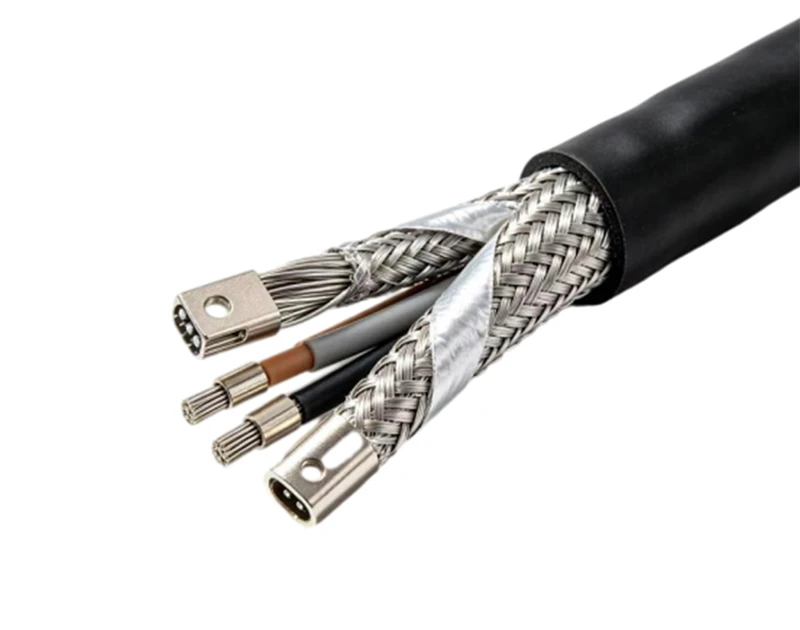
Automotive harness manufacturing is a data-driven process. The supplier must convert your requirements into a wiring diagram, bill of materials, cut list, process instructions, test specifications, and inspection records.
Missing or ambiguous information can create serious problems, including:
For this reason, a professional Custom Automotive Wiring Harness Manufacturer should review your documents through an engineering design review before releasing tooling or mass production. A practical target is to define drawing dimensions to at least 0.01 mm where the application requires that level of precision, while using suitable automotive tolerances for cables, conduit, terminals, and flexible branches.
Begin with the operating context. The same connector and wire may perform differently in an engine compartment, passenger cabin, chassis area, battery pack, or agricultural vehicle.
Send the following application details:
Also explain whether the harness will be installed manually, with semi-automated equipment, or on a production line. This affects branch orientation, clip placement, labeling, test access, and packaging.
The electrical specification is the foundation of harness design. A manufacturer needs more than the nominal voltage. It needs to understand the complete load profile and signal characteristics.
| Required Information | Examples | Why It Matters |
|---|---|---|
| System voltage | 12 V, 24 V, 48 V, high-voltage DC | Determines insulation, spacing, protection, and testing requirements |
| Current load | Continuous, peak, inrush, and standby current | Determines conductor cross-section, terminal rating, and fuse selection |
| Signal type | CAN, LIN, Ethernet, PWM, analog, sensor, coaxial | Determines shielding, twisting, impedance, and routing requirements |
| Circuit protection | Fuse, relay, circuit breaker, fusible link | Defines protection and serviceability requirements |
| Grounding strategy | Chassis ground, dedicated return, star ground | Reduces noise, voltage loss, and grounding faults |
Provide a circuit schematic or pin-to-pin netlist whenever possible. The documentation should identify wire numbers, circuit names, source and destination, fuse or relay location, and connector cavity assignments.
For high-current circuits, include the allowable voltage drop and duty cycle. For communication circuits, specify baud rate, impedance, shielding, twist pitch, and electromagnetic compatibility requirements. A Custom Automotive Wiring Harness Manufacturer cannot reliably select the correct cable construction from voltage alone.
The wiring diagram explains the electrical function, while the bill of materials defines the physical components. Send both documents in a controlled revision.
Your technical package should include:
Do not write only “automotive wire” or “standard connector.” These descriptions are too broad. Specify the exact component family and part number, because terminal plating, CPA design, seal geometry, keying, and mating force can differ even within the same connector series.
Mechanical information allows the supplier to control the harness envelope and installation fit. A two-dimensional drawing is useful, but a 3D CAD model is often essential for complex routing.
Send:
Define tolerances rather than relying on nominal dimensions. For example, a branch dimension may require a controlled tolerance of ±2 mm, while a molded or machined interface may require precision to 0.01 mm. The correct tolerance depends on the installation interface, component geometry, and manufacturing method.
Automotive harnesses are exposed to heat, cold, moisture, salt, vibration, chemicals, abrasion, and repeated movement. Tell the manufacturer where the harness will operate and what conditions it must withstand.
Important environmental data includes:
Relevant validation references may include ISO 16750 for environmental conditions and testing of electrical and electronic equipment in road vehicles, ISO 6722 for road-vehicle cables, and LV214 for automotive connector testing where the customer or vehicle program specifies it. Quality systems may also require IATF 16949, while wire harness workmanship is commonly evaluated using IPC/WHMA-A-620. ASTM or DIN methods may apply to specific materials, corrosion tests, or dimensional requirements.
State whether the supplier may select equivalent materials or must use customer-approved components. This distinction affects sourcing, cost, validation, and change control.
Specify requirements for:
If the harness is used in an electric vehicle or hybrid vehicle, identify high-voltage requirements, orange cable identification, interlock circuits, shielding, touch-safe connectors, and insulation resistance targets. These requirements should be reviewed by qualified engineers before prototype assembly.
Testing should be defined before production begins. Otherwise, the supplier and customer may have different interpretations of what “fully tested” means.
Request a documented control plan, process flow, inspection checklist, and certificate of conformity. For safety-critical harnesses, specify whether you require 100% electrical inspection, first-article inspection, crimp cross-section analysis, capability studies, or traceability by lot and operator.
A supplier may offer 100% continuity testing, but this does not automatically prove correct crimp geometry, long-term seal performance, or full environmental durability. Each test has a defined purpose and acceptance criterion.
Once the design is approved, manufacturing information becomes equally important. Send your packaging and logistics requirements early, especially when the harness has delicate connectors or a defined installation orientation.
Clarify:
A practical supplier evaluation should confirm whether the manufacturer can provide a quotation, preliminary design review, prototype schedule, and technical response within the required timing. A stated 24-hour response target is useful, but it should be written into the project communication plan rather than assumed.
A photograph can show the general shape, but it cannot reliably define wire gauge, cavity position, sealing requirements, tolerance, or electrical function. Use photographs as supplemental evidence alongside drawings, samples, and a pinout list.
Automotive designs change frequently. If a drawing has no revision number or release date, the supplier may manufacture from an outdated file. Mark every controlled document with revision status and identify which revision takes precedence.
“Total length: 1,000 mm” is often insufficient. The supplier also needs branch points, connector datum positions, breakout dimensions, and orientation references.
Oversized conductors increase cost, weight, bend stiffness, and packaging volume. Wire selection should consider ampacity, voltage drop, temperature derating, bundling, duty cycle, and applicable standards.
A harness can pass a continuity test and still have an incorrectly crimped terminal, damaged insulation, inadequate sealing, or poor dimensional accuracy. Electrical, mechanical, visual, and environmental controls should be evaluated together.
A connector that appears compatible may have different terminal plating, CPA geometry, keying, mating force, or environmental performance. Any substitution should be approved through engineering change control and validation.
Consider a manufacturer developing a 48-volt auxiliary power harness for an off-road vehicle. The initial request includes only a wiring sketch and approximate cable length. During prototype assembly, the harness is found to have insufficient clearance near a moving bracket, an incorrect connector key, and excessive voltage drop during peak motor current.
The project team then sends Onlink a complete technical package containing:
With this information, the Custom Automotive Wiring Harness Manufacturer can select an appropriate conductor, correct the connector keying before tooling, add protective sleeving at the abrasion point, and build a checking fixture for dimensional verification. The main lesson is that early engineering data is usually less expensive than late-stage rework.
Before sending your inquiry to Onlink, organize the files into a clear package:
| Folder | Suggested Files |
|---|---|
| 01_Application | Vehicle information, installation photos, operating conditions |
| 02_Electrical | Schematic, netlist, pinout, load table, fuse and relay data |
| 03_Mechanical | 2D drawing, 3D CAD model, dimensions, tolerances, datum structure |
| 04_BOM | Wire, connector, terminal, seal, protection, and label part numbers |
| 05_Quality | Inspection plan, test standards, acceptance criteria, certificates |
| 06_Logistics | Forecast, quantity, packaging, delivery location, and launch schedule |
Use consistent file names, such as
Before placing an order, ask the supplier:
What Information Should You Send a Custom Automotive Wiring Harness Manufacturer? At minimum, send a controlled package containing the application description, electrical specifications, schematic, pinout, BOM, mechanical drawing, 3D routing data, environmental conditions, quality standards, testing requirements, production quantity, packaging instructions, and delivery schedule.
In summary, What Information Should You Send a Custom Automotive Wiring Harness Manufacturer? You should send enough information for the supplier to answer five essential questions:
When these requirements are complete and revision-controlled, Onlink can evaluate the design more efficiently and help move the project from concept to validated production. Contact a qualified Custom Automotive Wiring Harness Manufacturer with your full technical package rather than a basic photo or approximate length. Better input produces better fit, more predictable quality, and fewer costly changes.


