Nov.24,2026
A reliable Custom Automotive Wiring Harness Manufacturer must prove more than cable length, connector fit, and delivery time. For OEMs, a wiring harness connects power, sensors, controllers, lighting, and safety systems. One open circuit, short circuit, reversed terminal, or loose crimp can stop a vehicle function or create a costly recall. Buyers should therefore review the supplier’s test method, test coverage, records, and acceptance limits before placing an order. This guide explains what an automotive wiring harness manufacturer for OEMs should provide, from drawing review to continuity testing and final traceability.
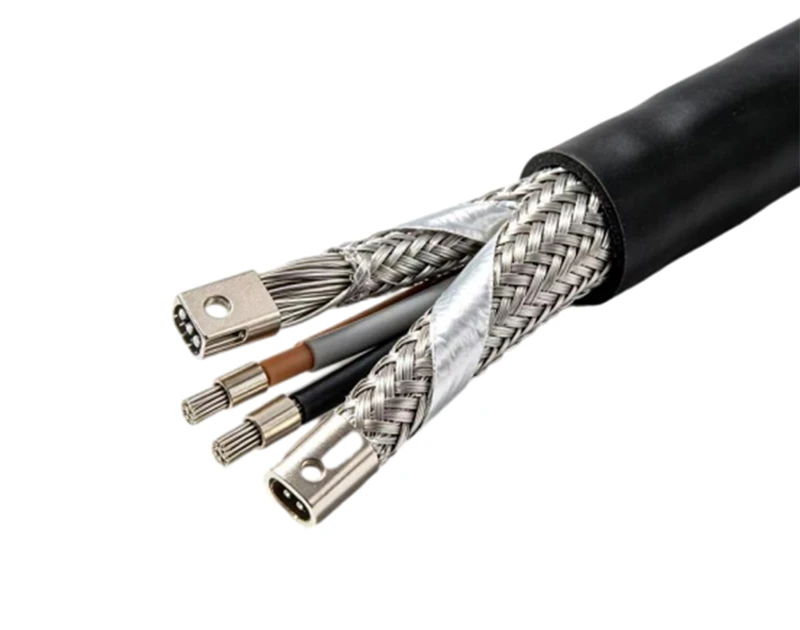
Wire harness continuity testing checks whether each required electrical path is complete and connected to the correct terminal. A tester sends a controlled electrical signal through the harness and compares the measured result with the wiring diagram or test program.
In production, the test normally checks several conditions:
Continuity testing is not the same as a visual inspection. A visual check may identify damaged insulation or an incomplete lock, but it cannot reliably confirm every internal circuit. It is also different from a dielectric withstand, or hipot, test. Continuity confirms the intended conductive path. A hipot test checks insulation resistance and electrical isolation under a higher test voltage.
A vehicle harness may contain hundreds of wires, terminals, seals, splices, clips, and connectors. The risk increases when the design includes multiple branches, shielded cables, high-current circuits, or safety-related signals. A test fixture can compare the finished harness against a digital pin map before the part reaches vehicle assembly.
For OEM purchasing teams, a documented test system supports four important goals:
These controls are especially important in automotive supply chains. IATF 16949:2016 focuses on quality management for automotive production and includes requirements related to product safety, risk-based thinking, process control, and supplier management. Buyers can review the standard through the .
A professional supplier should create a test plan from the approved drawing, wiring table, bill of materials, and customer specifications. The plan should not rely only on a general “pass” statement. It should identify what is tested, how it is tested, and what result is accepted.
The tester should confirm every required connection from the source terminal to the destination terminal. For example, if cavity A1 must connect to cavity B4, the test program should check that exact relationship.
OEM buyers should request:
The system should check that circuits that must remain separate do not conduct to each other. This is important for power, ground, communication, sensor, and signal lines.
The acceptance limit depends on the product design and tester capability. A supplier should not choose a resistance limit without customer approval. The approved value should consider wire length, conductor size, terminal resistance, contact resistance, and the electrical requirements of the connected system.
A harness may pass a simple continuity check while still containing a wrong terminal position if the test program is incomplete. The fixture should identify the correct connector cavity and test the full pin map. A barcode or digital work instruction can help prevent the operator from using the wrong fixture or harness variant.
Continuity testing cannot prove that every crimp has the correct mechanical strength. The supplier should also control crimp height, crimp width, conductor brush, insulation support, and pull force according to the terminal maker’s specification.
For automotive harness production, buyers should request:
The is a widely recognized reference for cable, wire, and harness assembly workmanship. The latest applicable revision and customer-specific requirements should be confirmed before production.
Continuity testing checks conductive paths, but insulation problems require additional methods. Depending on the design, the supplier may need to perform insulation resistance or dielectric withstand testing.
The test voltage, dwell time, leakage limit, and ramp method must be defined by the OEM or engineering specification. Applying an unsuitable voltage can damage electronic components, sensors, or suppressors. The manufacturer should therefore confirm whether the harness is tested alone or together with sensitive components.
Some harnesses include diodes, fuses, resistors, relays, LEDs, temperature sensors, or other components. The test plan should verify the component type, value, orientation, and location.
Polarity checks are important for battery cables, LEDs, diodes, motor circuits, and sensors. A harness can show electrical continuity even when a polarized component is installed backward.
Before approving a supplier, buyers should review the complete production flow rather than only asking whether the supplier owns a continuity tester.
The supplier should identify the drawing number, revision, customer part number, and effective date. The test program must be linked to the same revision used for cutting, crimping, assembly, and final inspection.
Ask the supplier:
The fixture should locate the connectors and terminals in a repeatable way. It should prevent incorrect insertion where possible and identify unsupported or missing cavities.
A good fixture review includes:
Ask for a test coverage table. It should show each net, component, connector, and required inspection. A statement such as “100% tested” is not enough unless the supplier defines what 100% means.
For example, a useful record may state:
| Test item | Required evidence | Typical control question |
|---|---|---|
| Continuity | Net list and measured result | Was every required circuit checked? |
| Short circuit | Isolation result and limit | Were unrelated circuits checked against each other? |
| Crimp quality | Crimp height and pull-force records | Were tool settings verified? |
| Connector lock | Visual or mechanical inspection record | Are terminal position assurance locks fully engaged? |
| Traceability | Lot, operator, fixture, and timestamp | Can the supplier isolate affected parts? |
The tester should have enough channels and measurement resolution for the harness design. It should also support the required voltage and resistance range without exceeding component limits.
OEM buyers should request:
A known-good sample should pass. A deliberately defective sample should fail. This challenge test confirms that the test station can detect the defects it is intended to find.
A failed harness should be identified, isolated, and investigated. The supplier should not simply retest the harness until it passes without recording the first failure.
A controlled failure process normally includes:
Ask how the supplier handles intermittent failures. A loose terminal or damaged probe may create a false pass or false failure. The investigation should separate product defects from equipment defects.
Continuity testing is only one part of supplier qualification. The purchasing specification should also define the materials, environment, performance, and documentation requirements.
The design may require resistance to heat, vibration, moisture, oil, chemicals, abrasion, or salt spray. The correct test depends on the vehicle location and the materials used.
For example, an engine-compartment harness may need higher temperature capability than an interior harness. A battery or high-voltage harness may also require special orange insulation, shielding, touch-safe connectors, and additional safety procedures. The supplier should use the OEM’s environmental profile instead of applying one generic test to every harness.
OEM buyers should match the supplier’s certificates to the actual project requirements. A certificate alone does not prove that a specific harness passed every required test, but it shows whether the supplier has a structured management system.
Useful references include:
Depending on the customer program, request a production part approval process package. It may include the process flow, process FMEA, control plan, measurement system analysis, capability data, material records, dimensional results, and sample approval.
Custom harnesses are used when the vehicle platform, equipment layout, connector system, or electrical architecture requires a specific design. Common applications include:
Harnesses connect lighting, infotainment, body control modules, doors, seats, cameras, parking sensors, and climate control systems. Branch length and connector location must match the vehicle body and assembly sequence.
Trucks and buses often require longer harnesses, higher current circuits, additional lighting, trailer interfaces, and stronger protection against vibration and moisture.
These vehicles use low-voltage signal harnesses and, in some areas, high-voltage cables. High-voltage assemblies require controlled insulation, shielding, clear identification, and safety-focused testing. The test voltage and method must be approved by the vehicle engineering team.
Off-road machines face dust, water, mud, vibration, and temperature changes. Protective conduit, sealed connectors, abrasion protection, and strain relief can be as important as the wire itself.
Emergency vehicles, recreational vehicles, delivery vans, and modified fleet vehicles may require low-volume harnesses with unique connectors, branch points, relays, and control interfaces.
The main advantage is controlled integration. A capable supplier can connect design review, material selection, wire processing, crimping, assembly, testing, and shipment records in one process.
A harness built from an approved 2D drawing, 3D layout, and pin map is less likely to have incorrect branch lengths or connector locations. A first-article sample can reveal fit problems before volume production.
When a test record contains the part number, lot number, fixture ID, test-program revision, and failure code, the quality team can narrow the investigation to a specific production group instead of checking all inventory.
Automotive programs often change connector suppliers, wire colors, terminals, clips, or branch locations. A controlled supplier can update the bill of materials, work instruction, test fixture, and inspection plan together.
Standardized crimp tools, verified fixtures, operator training, and documented inspection limits reduce variation between shifts and production lots. Buyers should measure performance using defect rates, first-pass yield, on-time delivery, and corrective-action closure time rather than general claims such as “high quality.”
Use a scorecard with measurable criteria. The following questions can help separate a production-ready supplier from a simple assembly workshop:
| Evaluation area | Questions for the supplier |
|---|---|
| Engineering | Can the team review drawings, pin maps, tolerances, and design risks? |
| Testing | Is every approved net tested, and are limits documented? |
| Traceability | Can each shipped lot be linked to test and material records? |
| Crimp control | Are crimp height, pull force, and tool maintenance controlled? |
| Change management | Are drawing and test-program revisions formally approved? |
| Capacity | Can the supplier support prototype, pilot, and repeat production volumes? |
| Corrective action | Does the supplier use root-cause analysis and verify corrective actions? |
| Customer support | Can the supplier provide samples, inspection reports, and technical communication? |
Request a sample harness, test report, process flow, and quality certificate before final approval. If the design is safety-related, include engineering, quality, purchasing, and manufacturing representatives in the supplier audit.
Before approving a harness supplier, confirm that the following items are available:
This checklist can be added to a supplier quality agreement or purchase specification. The exact limits should come from the OEM engineering drawing, customer standard, and applicable regulatory or safety requirement.
For many production harnesses, 100% continuity and short-circuit testing is a practical control. However, the required method depends on the vehicle program, risk level, harness design, and customer specification. The OEM should define the required coverage and acceptance limits.
There is no single value for every harness. The limit depends on conductor length, wire size, terminal resistance, connector contact resistance, and the connected circuit. The supplier should calculate or validate the limit and obtain engineering approval.
It may detect a completely open or high-resistance connection, but it cannot confirm all mechanical crimp defects. Crimp height inspection, pull-force testing, and periodic cross-section analysis provide additional evidence.
Continuity testing confirms the intended conductive path. Hipot testing applies a higher voltage to check insulation separation and dielectric strength. A harness may pass one test and fail the other.
For traceability-focused automotive programs, storing individual or lot-level results is recommended. The retention period should follow the customer contract, quality system, and applicable safety requirements.
Ask the supplier to run a known-good harness and controlled defective samples. The good sample should pass, while each planned defect should fail with the correct error code. Also review calibration, fixture maintenance, software revision, and operator training.
Onlink can be considered for custom automotive wiring harness projects that require drawing review, connector and terminal matching, prototype development, assembly control, continuity testing, and production documentation. Share the wiring diagram, connector list, annual volume, application environment, and required test standard so the project team can recommend the correct process.
Start with the approved wiring diagram and convert it into a supplier test matrix. Then ask each candidate to provide a sample harness, continuity test report, crimp-quality evidence, fixture plan, and traceability example. Compare measurable items such as test coverage, resistance limits, first-pass yield, defect rate, response time, and corrective-action closure—not broad claims without records.
For teams looking for a custom vehicle wire harness supplier, the next step is to send the current drawing revision and project requirements to Onlink for a technical review. A clear test plan at the start can prevent incorrect connections, reduce line stoppages, and support reliable vehicle assembly.


